
 EN
EN
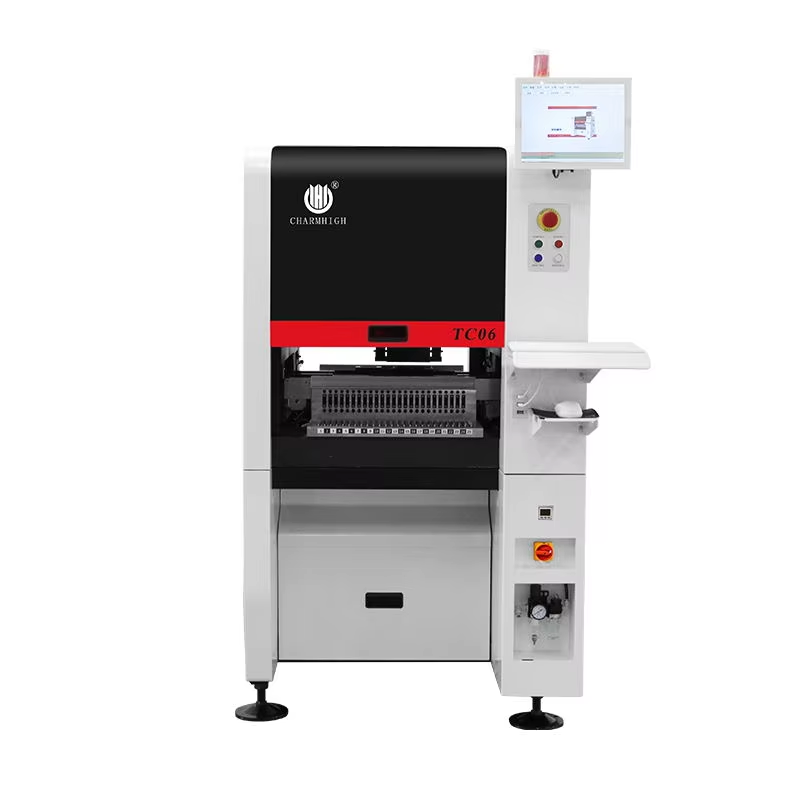
Understanding the Speed vs. Precision Trade-Off in SMT Pick and Place Machines
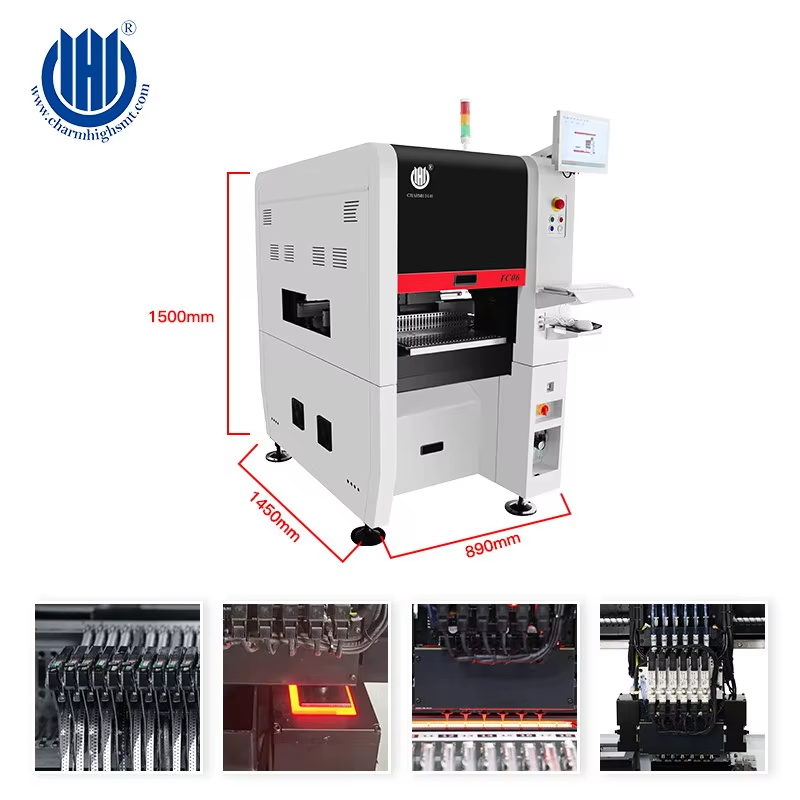
The fundamental trade-off between speed and accuracy in SMT machine performance
Balancing speed against accuracy is one of those tricky problems engineers face daily in electronics manufacturing. When SMT machines run at top speed, they definitely boost components per hour (CPH), but something has to give somewhere else. Placement gets less precise, especially with those tiny components that need positioning within just 20 microns or so. Why does this happen? Well, basically because the machines struggle with sudden starts and stops plus all the vibrations that come with fast movements. Today's pick and place systems try to fix this with better motion controls and cameras that adjust on the fly. Still, nobody claims these solutions solve everything completely. Physics puts limits on what we can achieve right now, no matter how smart our engineers get.
Components per hour (CPH) as a key metric for production efficiency
CPH or components per hour is basically what everyone looks at when trying to figure out how efficient an SMT assembly line really is. What this number tells us is how many parts a machine can theoretically place in one hour if everything goes perfectly. Top of the line equipment can hit around 120 thousand components per hour based on what most manufacturers report. But let's be real, nobody actually hits those numbers day to day. Real world production usually sits about 30 to 40 percent below those ideal figures because of all the stoppages needed for changing feeders, moving boards around, and running those pesky vision inspections. Factory managers need to find that sweet spot between wanting higher throughput and maintaining quality standards. When they push machines too hard past their optimal speeds, guess what happens? More mistakes during component placement and ultimately fewer good products coming off the line on the first try.
Sub-20-micron accuracy requirements in advanced electronics manufacturing
In today's electronics manufacturing world, getting down to sub-20 micron accuracy is becoming essential for working with tiny parts such as those 0201 sized chips and micro-BGA packages. Think about it: that kind of precision is roughly equivalent to something just one fifth as wide as a single strand of hair. To achieve this level of detail, manufacturers need rock solid machinery foundations, super sharp vision systems for component placement, plus strict temperature management throughout production since even slight heat changes can throw everything off track. As we move toward smaller component pitches across various sectors, especially important fields like automotive electronics, medical devices, and aerospace systems where failure isn't an option, maintaining such tight tolerances matters far more than regular consumer goods. And here lies the real challenge facing engineers right now: how do they keep up with these microscopic specs while pushing forward faster production rates? This balancing act defines much of what goes into designing contemporary surface mount technology equipment today.
How speed-accuracy balance impacts overall production throughput and quality
Finding the right balance between speed and accuracy really matters for how much gets produced and what quality comes out of it. When manufacturers push for faster placement speeds, they do get higher numbers on paper, but this often leads to components being off track. These misalignments mean extra work fixing them or just throwing them away altogether, which cuts down on what actually makes it through the system. Some research in the field shows that bumping up speed by around 15% might only translate to about 3 to 5% better throughput when accounting for all those quality issues. The best results happen somewhere in the middle ground where machines still hit their accuracy targets but manage to place good components at a decent rate. This sweet spot isn't fixed though; it changes depending on factors like what kinds of parts are being used, how complicated the boards are, and what each specific machine can handle.
Key Technologies Enabling Precision in SMT Pick and Place Machines
Advanced vision systems for real-time component alignment and error correction
Today's surface mount technology (SMT) pick and place machines come equipped with advanced vision systems that rely on high res cameras combined with artificial intelligence for image processing. These setups can get down to around 20 microns of precision when placing components on circuit boards. What makes these systems so effective is their ability to recognize components as they go, making instant adjustments for any angle issues or position problems during the actual placement. Manufacturers have found that using vision guided alignment cuts down on mistakes by almost 90% compared to older mechanical methods. This means fewer rejected boards right off the line, which is especially valuable when working with densely packed PCBs where even small errors matter a lot.
Servo control and feeder precision: Foundations of placement repeatability
Getting components placed consistently depends a lot on good servo control systems and modern feeder tech. Servo motors that pack high torque and have those closed loop feedback systems keep things accurate down to about plus or minus 15 microns. Meanwhile, smart feeders handle tape advancement automatically so parts come out just right every time. All this tech behind the scenes means placement can be repeated over and over again at rates above 99.95%. That kind of repeatability makes all the difference when running large scale production lines where quality has to stay consistent across thousands of units.
Breakthroughs in motion control enabling sub-20-micron placement accuracy
The latest improvements in motion control tech have really changed how accurate component placement is in those surface mount technology pick and place machines. We're seeing linear motors paired with direct drive systems these days that can accelerate faster than 2G but still keep things stable enough for precise positioning. What this means practically is machines run super fast without sacrificing their pinpoint accuracy. The best part? These systems actually dampen vibrations as they happen and adjust for temperature changes on the fly. So even during long production shifts where machines are cranking out parts at top speed (we're talking hundreds of components per hour here), they maintain that incredible sub 20 micron level of precision across the board.
Optimizing SMT Processes for Balanced Throughput and Quality
Process optimization strategies for high-mix, low-volume production environments
Getting SMT processes right for high mix, low volume production means finding ways to work fast without losing accuracy. A good approach is line balancing where we spread out the placement jobs among several machines so nothing gets backed up. The feeder setup also matters a lot. When components are organized based on how often they get used, it cuts down on the time the nozzle spends moving around. Regular maintenance checks keep everything running smoothly too. We make sure to calibrate those nozzles, check the cameras, and verify feeders periodically so parts still land exactly where they should. All these tactics help factories stay reliable even when products change constantly and batches remain small, which is pretty much standard nowadays in high mix manufacturing settings.
Case study: Maintaining placement accuracy while increasing CPH output
One major electronics company managed to boost its components per hour (CPH) production by around 33% without compromising on placement accuracy below 20 microns. They pulled this off through some serious process tweaking. The team focused heavily on optimizing how feeders were set up and started using real time monitoring systems across the floor. This helped cut down wasted machine downtime and significantly cut back on those pesky placement mistakes. What really made it work was getting their surface mount technology (SMT) pick and place machines talking properly with all the other equipment before and after them in the production line. Turns out you can get better throughput numbers without having to settle for lower quality results if the right adjustments are made throughout the whole manufacturing chain.
The hidden cost of speed: When high CPH reduces first-pass yield due to accuracy drift
Going for top components per hour (CPH) numbers might actually hurt first pass yields because of accuracy drift, and those hidden costs eat into any gains from faster throughput. SMT pick and place machines start making small mistakes when pushed past their best precision levels. These little errors pile up especially bad with those tiny fine pitch parts and ball grid arrays. What happens? Soldering problems pop up left and right, plus all sorts of alignment issues. The factory ends up spending extra time on rework or throwing away defective boards altogether. This cuts down real production efficiency even though the machine is technically running faster according to specs. Smart manufacturers keep an eye on how speed settings affect actual quality measurements rather than just chasing speed records.
Component Placement Accuracy and Long-Term PCB Assembly Reliability
How SMT Placement Accuracy Affects Solder Joint Integrity and Rework Rates
How accurately components are placed has a huge impact on both the quality of solder joints and how efficient the manufacturing process runs. When SMT pick and place machines hit that sweet spot below 20 microns in accuracy, everything lines up right over those solder paste deposits, so we get good wetting action and solid joint formation. But even tiny mistakes matter a lot. Something as small as 50 microns off track can lead to problems like poor solder coverage, those pesky tombstone defects where parts stand upright instead of lying flat, or solder bridges connecting where they shouldn't. These kinds of issues drop our first pass yield rate somewhere around 15%. And when boards need fixing by hand, it costs roughly $45 extra per unit. Worse still, all that heating from manual touch ups actually weakens the board over time. Looking at how placement errors translate into money spent on fixes makes it clear that accuracy matters beyond just getting things right the first time. It plays a major role in keeping production costs under control while maintaining product reliability.
Misalignment Risks in Fine-Pitch Components and BGAs: Root Causes and Prevention
Fine-pitch components and ball grid arrays (BGAs) present particularly challenging alignment scenarios where even minor deviations cause catastrophic failures. Components with pitches below 0.4mm require placement accuracy within 15–20 microns to ensure proper ball-to-pad alignment. Common root causes of misalignment include:
- Vision system limitations: Inadequate lighting or camera resolution failing to detect subtle component variations
- Mechanical drift: Wear in nozzles or feeders accumulating over production runs
- Environmental factors: Temperature fluctuations affecting machine calibration
- Solder paste slump: Paste spreading before component placement altering target positions
Prevention strategies incorporate advanced fiducial recognition systems, regular calibration cycles, and environmental controls to maintain consistent placement performance throughout production runs.
Reliability Implications of Marginal Placement in Mission-Critical PCBs
When parts are positioned just slightly off their intended spots, they tend to develop problems that stay hidden during basic tests but show up later when equipment is actually used in real world conditions, especially when exposed to temperature changes or constant movement. For really important stuff like heart monitors or car safety systems, these sneaky flaws have been observed to cause failures that go way up maybe around triple what they start at within about five years based on some industry testing reports. That kind of reliability issue poses serious dangers for manufacturers who need absolute dependability from their products.
- Intermittent connections: Partially connected components creating unpredictable failures
- Solder joint fatigue: Misaligned joints experiencing unequal stress distribution during thermal expansion
- Electrical performance degradation: Signal integrity issues in high-frequency circuits due to improper grounding
- Corrosion susceptibility: Exposure of copper surfaces due to inadequate solder coverage
These reliability implications underscore why placement accuracy transcends immediate production metrics and fundamentally determines product lifetime performance, particularly in applications where failure carries significant safety or financial consequences.
Real-World Performance Evaluation of SMT Pick and Place Machines
Beyond specs: Benchmarking actual speed and precision in production settings
Manufacturers often tout their top performance numbers for SMT pick and place machines, sometimes going as high as 200,000 components per hour according to specs. But when these machines hit the factory floor, there's usually quite a difference between what's promised and what actually gets produced. Things like changing out components, keeping feeders running reliably, and getting those vision systems properly calibrated all eat into those impressive figures, cutting real world output down by around 15 to maybe even 30 percent from what catalogs claim. The numbers get even more interesting when looking at precision. Staying within tight tolerances below 20 microns becomes really tough at those claimed speeds. Even the fanciest equipment tends to lose accuracy after running nonstop for hours on end. This is exactly why smart manufacturers test these machines in real production settings instead of just checking off spec sheets before making a purchase decision.
Field comparison: A leading manufacturer versus global competitors
Field tests done by independent evaluators looking at a major Chinese manufacturer versus well-known global brands point out some pretty significant gaps when it comes to how reliable and consistent these machines are in actual operation. Sure, Chinese made equipment usually looks good on paper with lower upfront costs and decent speed specs, but when put through their paces in real production settings, they tend to fall short. Tests show about 12 to maybe even 18 percent less accurate results over long production runs compared to those premium international brands. What makes the difference? Global manufacturers generally have better heat management in their moving parts and more solid camera calibration systems. Their machines keep placements spot on, staying within just 1 or 2 microns of where they should be even after running nonstop for hours. And this matters a lot in places like PCB assembly lines where tiny misplacements can ruin entire batches of circuit boards.
FAQ
Why are speed and accuracy crucial in SMT Pick and Place Machines?
Speed and accuracy are vital because while fast placement increases throughput, it often trades off precision, leading to increased errors and reduced first-pass yields in electronics manufacturing.
What methods improve component placement accuracy below 20 microns?
Advanced vision systems, servo control, and breakthroughs in motion control technology aid in achieving precision below 20 microns, leveraging high-resolution cameras, AI, and stable motion systems.
How can manufacturers prevent misalignment in Fine-Pitch Components and BGAs?
To prevent misalignment, manufacturers can implement advanced fiducial recognition systems, regularly calibrate machinery, and control environmental factors affecting placement accuracy.
What is components per hour (CPH), and why is it important?
Components per hour (CPH) is a key metric that measures how many parts an SMT machine can place in one hour. It's crucial for assessing production efficiency but should be balanced with quality considerations.
How do inaccuracies affect PCB reliability?
Inaccuracies during component placement can lead to defects like tombstone, bridges, and poor solder joint formation, impacting PCB's reliability and increasing rework costs.
Table of Contents
- Understanding the Speed vs. Precision Trade-Off in SMT Pick and Place Machines
- Key Technologies Enabling Precision in SMT Pick and Place Machines
- Optimizing SMT Processes for Balanced Throughput and Quality
- Component Placement Accuracy and Long-Term PCB Assembly Reliability
- Real-World Performance Evaluation of SMT Pick and Place Machines
-
FAQ
- Why are speed and accuracy crucial in SMT Pick and Place Machines?
- What methods improve component placement accuracy below 20 microns?
- How can manufacturers prevent misalignment in Fine-Pitch Components and BGAs?
- What is components per hour (CPH), and why is it important?
- How do inaccuracies affect PCB reliability?