
 EN
EN
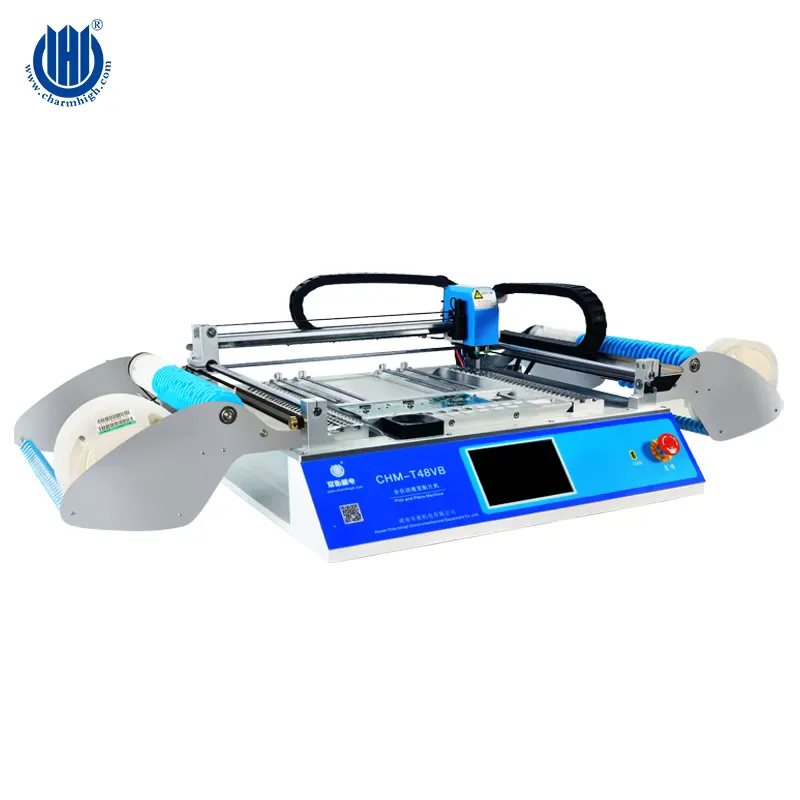
The Strategic Imperative for Automated SMT Equipment
Industry-Wide Shift: From Manual Assembly to Fully Automated SMT Lines
Electronics manufacturing has changed dramatically because traditional manual assembly just can't keep up with what modern production needs these days. Back when tech workers placed parts by hand, things were slow and error prone. Now SMT equipment handles components with incredible accuracy, placing them at rates over 25 thousand per hour. This change goes beyond just day to day operations; it affects how companies plan their entire strategy. Factories that switch to full automation with SMT see assembly times drop by about 70 percent and almost zero mistakes when making those dense circuit boards. With components getting smaller than ever before, sometimes down to 01005 size specs, manufacturers simply cannot compete without automated systems anymore. The ability to scale production and repeat processes exactly the same way every time has become essential for staying ahead in this industry.
Driving Forces: Miniaturization, Component Density, and Time-to-Market Pressure
Three critical market dynamics cement automation's necessity:
- Miniaturization: Consumer electronics now demand 40% smaller components than five years ago, requiring precision unreachable manually.
- Component Density: Modern PCBs pack over 5,000 placements per board—a 2.5× increase since 2018.
- Time Compression: 63% of OEMs face sub-90-day product cycles, making rapid prototyping and changeover capabilities essential.
Automated SMT equipment directly addresses these pressures through closed-loop process control, where real-time optical inspection adjusts placements before reflow. This preemptive defect reduction slashes rework costs by up to $740k annually for mid-volume producers. The result? Manufacturers bypassing automation risk obsolescence as component complexity outpaces human capabilities.
How Automated SMT Equipment Optimizes the Full Production Workflow
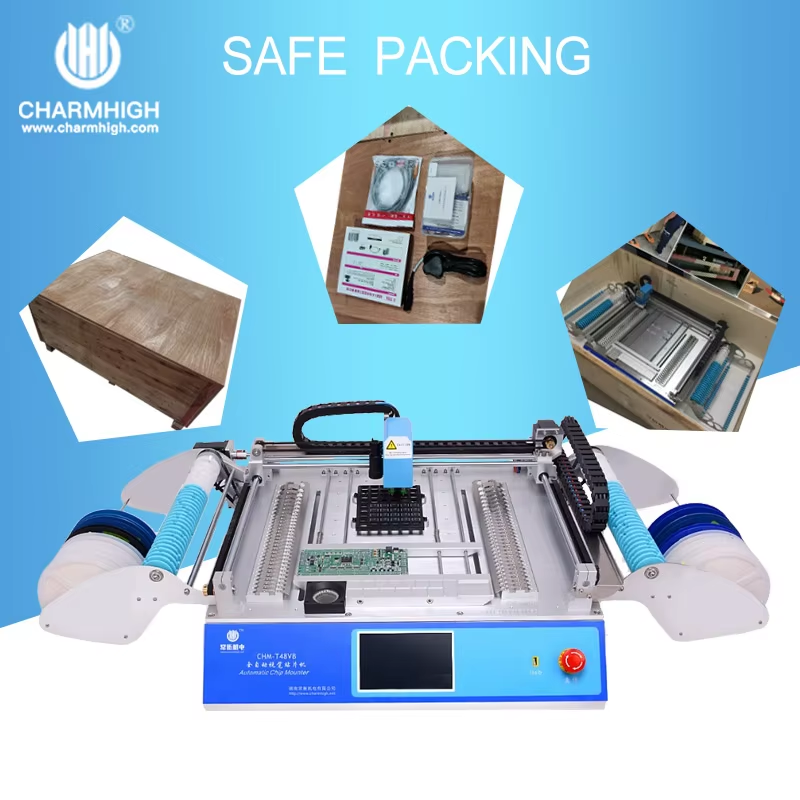
End-to-End Process Control: Solder Paste Printing, Pick-and-Place, Reflow, and Inspection
SMT automation builds a production line where every step talks to the next one, cutting out those time wasting manual transfers between stations. The solder paste printers are super accurate, laying down material within about 0.025mm either way. And there are these built-in heaters that keep the paste from getting too runny or stiff, which helps avoid those pesky cold solder issues. Next come the high speed pick and place machines that can drop components onto boards at惊人的速度of around 30 thousand per hour. These machines have those fancy vision systems that guide them with incredible precision. As components move along, they pass through nitrogen filled reflow ovens with multiple temperature zones. This setup makes sure all those tiny connections get formed properly across the board. Automated optical inspection systems check things at various points throughout the process. They look at how much paste was applied after printing, confirm components are placed correctly once mounted, and finally check if solder joints hold up after going through the oven. The whole system cuts down on human involvement by roughly three quarters when compared to older semi automatic setups. Most manufacturers see their first pass yields stay well over 99 percent even with complex, densely packed circuit boards.
Defect Prevention: Closing the Loop Before Reflow with Real-Time Feedback and AI-Driven AOI/X-Ray Integration
Today's surface mount technology lines catch problems right where they start thanks to sensors constantly sending data to smart algorithms. The solder paste inspection systems spot when there's not enough paste applied or when bridges form between pads, which prompts the machine to clean the stencil automatically or tweak pressure settings before placing any parts. Pair this with 3D optical inspection and X-ray checks, and manufacturers get a detailed virtual copy of every board assembly. These systems compare actual measurements to perfect reference boards, getting down to details as small as 15 microns. Smart software looks back at past issues such as tombstoning components or misaligned chips to anticipate trouble spots. It then adjusts placement forces or changes how heat is applied during soldering. Fixing problems before the solder even melts cuts down on expensive rework by around 90%. And when defects do slip through, correcting them takes roughly ten times less effort compared to fixing after soldering. Most importantly, serious issues like hidden air pockets in ball grid arrays or completely missing parts rarely make it past quality control anymore.
ROI, Scalability, and Future-Proofing with Modular SMT Equipment
Tangible Cost Efficiency: ROI Achieved in 9–14 Months for Mid-Volume Manufacturers
Mid-volume electronics manufacturers achieve ROI on modular SMT equipment within 9–14 months by reducing labor costs by ~30% and minimizing defects through automated precision. This accelerated payback period stems from three core efficiencies:
- Labor optimization: Eliminating manual component placement and inspection
- Quality gains: Near-zero solder paste errors via AI-driven feedback loops
- TCO (Total Cost of Ownership) reduction: Lower maintenance versus rigid systems
Precise ROI calculations should account for production uptime improvements (typically 20–40%) and scrap-rate reductions averaging 15% annually.
Scalable NPI Support: From Prototype Runs to High-Mix, High-Volume Production Using Modular SMT Equipment
Modular SMT systems enable seamless scaling from prototype batches to mass production by allowing reconfiguration without full reinvestment. Key scalable features include:
- Quick-change tooling: Adapt feeders and nozzles in <15 minutes for new component formats
- Capacity stacking: Add placement modules to existing lines, boosting output incrementally
- Software-defined workflows: Reprogram assembly sequences for mixed-technology boards
This flexibility reduces NPI changeover time by up to 70% versus fixed systems, with manufacturers reporting 50% faster market entry for new products when leveraging reconfigurable modular systems. The approach future-proofs operations against evolving component miniaturization trends and volatile demand cycles.
FAQ
What are the benefits of automated SMT equipment?
Automated SMT equipment reduces assembly time by about 70%, minimizes errors, and is essential for handling increasingly smaller components. It also promotes scalable production and repeatable processes, crucial for staying competitive.
How is automation addressing the demand for miniaturization in electronics?
As consumer electronics demand smaller components, automation provides the precision needed to handle 40% smaller components than five years ago, which is impossible to achieve manually.
Why is modular SMT equipment considered future-proof?
Modular SMT equipment allows manufacturers to scale from prototype to mass production without full reinvestment. Its flexibility handles changes in component size and demand cycles, safeguarding against obsolescence.