
 EN
EN
Understanding the Small-Batch SMT Production Line Challenge: Balancing Flexibility, Speed, and Yield
Why Traditional SMT Lines Struggle with High-Mix, Low-Volume Demand
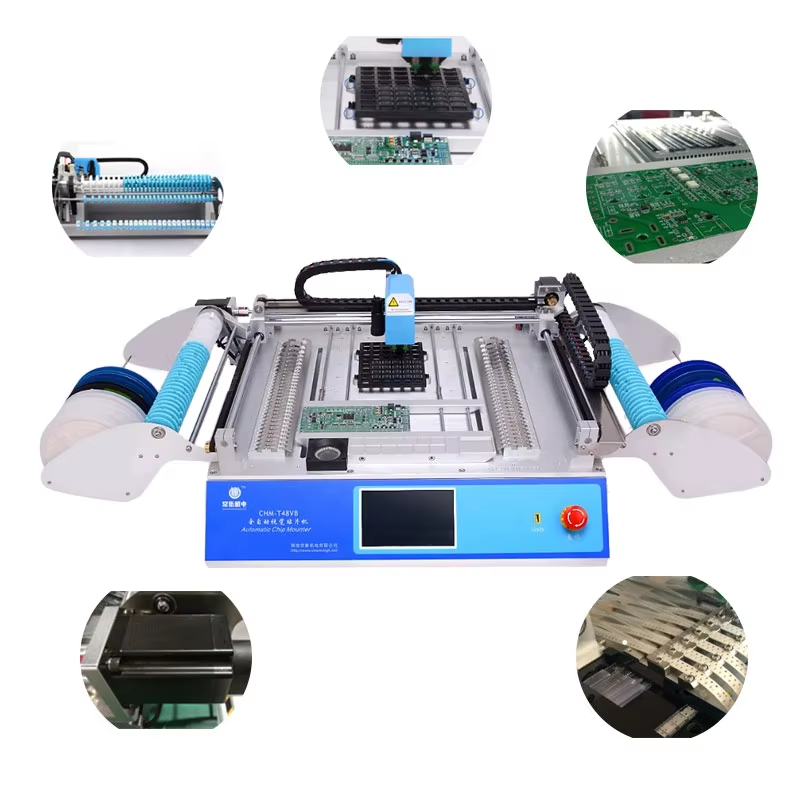
Standard SMT Production Line built for mass production just don't cut it when dealing with high mix, low volume (HMLV) manufacturing needs. The problem lies in those rigid feeder systems that need constant manual adjustments whenever components change. This leads to more setup mistakes and can stretch changeover times by about 30%. When running mixed product batches, placement accuracy often drops past 35 microns, which means higher defect rates approaching 18% in some cases. Manufacturers are feeling the pinch too. A recent 2023 Ponemon Institute report found these kinds of inefficiencies costing companies around $740,000 each year in lost productivity across the electronics manufacturing sector.
The Core Trade-Off: Automation Rigidity vs. Human-Agile Adaptation
Factories have always struggled with a basic problem: automated machines work great when everything stays the same, but get stuck whenever designs change. Human workers can adjust on the fly, but they just can't match machines for tiny details. The result? First pass yields often drop below 82% when running different product batches together. Closed loop vision systems are changing this equation. They don't replace humans or machines outright, but instead help machines stay consistent while still adapting to changes. These systems use something called ATS calibration protocols to cut down on solder paste mistakes by around 40%. Best part is, companies don't need to spend time and money on new tooling or rewrite entire programs every time there's a production shift.
Optimizing SMT Production Line Layout for Batch Variability
From Linear to Hybrid: How U-Shaped and Modular Layouts Enable One-Piece Flow
The problem with linear SMT setups becomes really apparent when dealing with small batches. The long material paths, stations tied together in fixed positions, and those annoying single point bottlenecks just get worse every time we switch products. That's where U-shaped configurations come into play. By placing all the equipment in a half circle shape, operators can actually see several stations at once while walking around them. We've seen travel distances drop by almost 40% in our own facilities. And this isn't just about saving steps either it helps maintain continuous flow of individual units rather than batches, which makes responding to changing priorities much faster. Modular layouts take things even further. These self contained work cells, like that inline inspection module we put between component placement and solder reflow, can literally be moved around or swapped out within a few hours. Compare that to traditional linear systems where any upgrade requires shutting down the whole line. With modular cells, improvements happen right where they're needed without stopping production or letting problems spread through the rest of the manufacturing process.
Validating Layout Changes with Digital Twin Simulation Before Physical Reconfiguration
Digital twin simulations take a lot of the uncertainty out of optimizing factory layouts. When engineers model actual conditions like how often PCB designs need changing, what limitations feeders have, and temperature differences across different zones, they can test various setup combinations without spending money or taking up valuable floor space first. These virtual tests actually catch problems nobody thought about beforehand. For instance, sometimes there's not enough room between the solder paste printer and the pick-and-place machine when companies try to implement a U-shaped layout. Finding these issues early means making changes before equipment is installed. Companies report savings anywhere from 30% to maybe even half on having to rearrange things physically later. Plus, it helps keep production lines balanced properly for whatever volume they need to handle day to day.
Process-Level Optimization Across Critical SMT Production Line Stages
Targeting Bottlenecks: Feeder Reconfiguration and Placement Accuracy Drift in High-Mix Runs
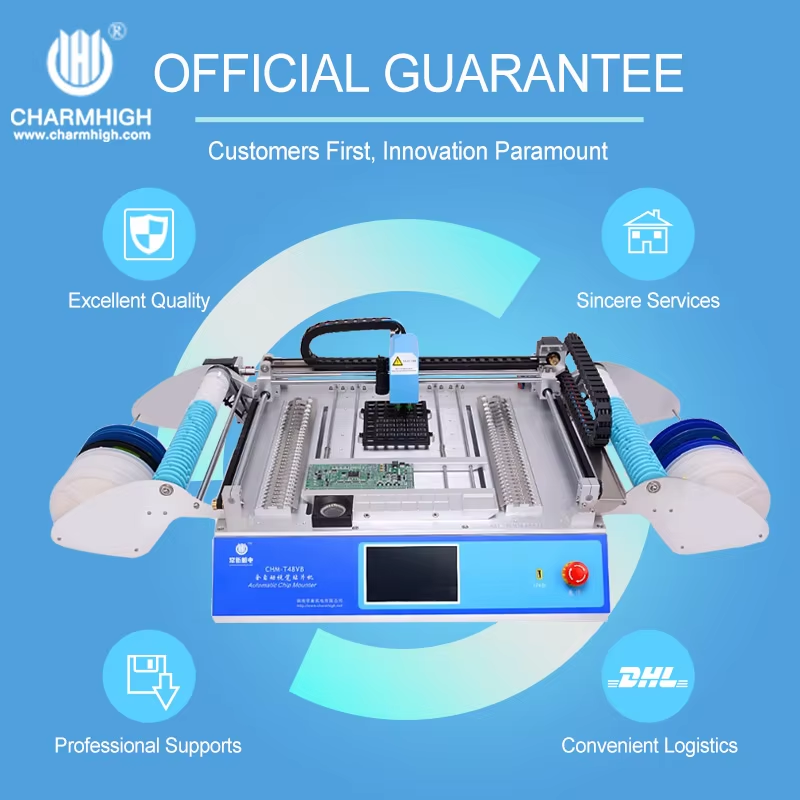
HMLV SMT performance is mainly limited by two problems that work together: too much time spent on feeder reconfiguration and issues with placement accuracy caused by temperature changes. When workers have to manually swap feeders, this can take away around 30% of their productive hours according to recent studies from the Electronics Manufacturing Journal back in 2023. What's worse, when machines run for long periods, the heat buildup causes placement errors that go past 50 micrometers, which is way over what's acceptable for those tiny micro-BGA chips and 01005 components. To fix these issues, manufacturers need to combine different approaches. Some factories are now using modular feeder systems that let them switch formats in less than ten minutes flat. Others invest in placement heads with built-in lasers that automatically adjust for thermal expansion during operation. And there's also the growing trend toward predictive maintenance where sensors track nozzle wear patterns and schedule calibrations before accuracy starts slipping, stopping quality problems before they even happen instead of waiting until something goes wrong.
Smart Feeders and Closed-Loop Vision Alignment: Boosting First-Pass Yield Consistency
When smart feeders work together with closed loop optical alignment systems, they create what many in the industry call a kind of control synergy that keeps production yields stable despite variations between batches. RFID tagged reels do more than just track components these days they actually verify if parts are genuine, check their orientation on the line, and count down how many remain in stock. This simple validation step cuts down on those frustrating setup errors where wrong components get fed into machines, reducing such issues by around 72 percent according to field tests. Inline AOI systems take things further by capturing super detailed position information within plus or minus 0.01 millimeters. These measurements go straight into control algorithms that look at how placement shifts over time compared to factors like room temperature changes or vibrations coming from conveyor belts. What happens next? The system makes adjustments to coordinates right away before new circuit boards reach the actual placement area. Manufacturers report that this approach brings down rework needs by about 40% while keeping initial pass rates consistently above 99.2%, even when running non stop for full 24 hour periods with mixed product types.
Enabling Real-Time Control and Continuous Improvement on the SMT Production Line
With real time monitoring, those old fashioned reactive SMT operations become something much better - systems that can respond and fix themselves as problems happen. The IoT sensors we put inside solder paste printers, those pick and place machines, and even the reflow ovens are constantly sending live updates about how much solder is being deposited, where components might be placed off center, and whether the heat profiles match specifications. All this data gets collected in cloud dashboards that work for plants all around the world. When something goes wrong, like an unexpected increase in solder voids or if one particular nozzle keeps getting jammed, the system flags it almost instantly rather than waiting until someone notices during their next shift check. For production managers, this means they can spot bottlenecks and quality issues right away, so they don't have to wait for small problems to turn into big headaches down the line.
The whole setup makes for ongoing improvements based on actual data rather than just gut feelings. Smart algorithms go through old sensor readings looking for those hard to spot patterns that keep coming back again and again. Think about things like when the machine starts drifting out of place after running non-stop for certain number of hours, or how changes in temperature during soldering often match up with sudden jumps in humidity levels around the factory floor. What comes out of this analysis helps plan when maintenance should happen before problems start, plus automatically tweak settings like how often we clean the stencils or adjust heating speeds depending on what kind of product is coming next in production. As these systems get smarter over months and years, they don't just watch what's happening anymore but actually start making adjustments themselves. We've seen factories cut down defects by roughly 25 to 30 percent in places where multiple products are made on the same line, all while keeping quality consistent between batches without anyone needing to manually reset everything every time something changes.
FAQ
1. What is SMT?
Surface Mount Technology (SMT) is a method for producing electronic circuits where components are mounted or placed directly onto the surface of printed circuit boards (PCBs).
2. Why is SMT challenging for small-batch production?
SMT is challenging for small-batch production due to the need for constant manual adjustments and reconfiguration that increase setup errors and extend changeover times, impacting efficiency and productivity.
3. How do smart feeders improve SMT processes?
Smart feeders enhance the SMT process by using RFID tagging for real-time tracking and validation of components, reducing setup errors and increasing yield consistency.
4. What role do digital twins play in SMT Production Line optimization?
Digital twins simulate production environments to help identify and resolve layout and process issues before physical changes are made, reducing the need for costly reconfigurations.
Table of Contents
- Understanding the Small-Batch SMT Production Line Challenge: Balancing Flexibility, Speed, and Yield
- Optimizing SMT Production Line Layout for Batch Variability
- Process-Level Optimization Across Critical SMT Production Line Stages
- Enabling Real-Time Control and Continuous Improvement on the SMT Production Line