
 EN
EN
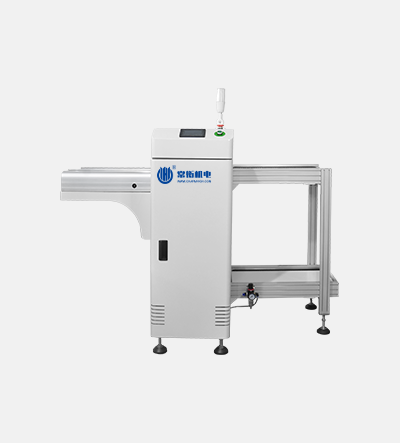
SMD Pick and Place Machines Vision System Performance: CCD Imaging, Calibration, and Environmental Stability
Dual-Stage Imaging for Coarse Alignment and Fine Landmark Detection
Top tier pick and place equipment relies on two stage vision systems to get those super accurate placements at the micron level. First there's this wide field camera that does quick rough positioning, getting parts within about half a millimeter of where they need to go. Then comes the high mag CCD sensor, which can detect down to 25 microns per pixel, looking closely at those fiducial marks and component leads for fine tuning. This two step approach lets machines make their final adjustments with around plus or minus 15 microns accuracy. When compared against older single stage systems, manufacturers report cutting production cycles by roughly forty percent without compromising quality. Defect rates stay below twenty parts per million even for those tiny 01005 components, which is pretty impressive considering how small these things actually are.
Calibration Drift and Lighting Variability as Primary Sources of Sub-Pixel Misalignment
When it comes to vision systems, environmental factors are responsible for around three quarters of all placement errors. Let's look at some specifics: when temperatures change, lenses can shift focus by about 0.3 micrometers per degree Celsius. Humidity levels above 60% relative humidity actually require an 8% adjustment along the Z-axis. Even small changes in LED brightness matter too. A mere 10% variation in light intensity creates shadows that throw off landmark detection by between 4 and 12 micrometers. To combat these issues effectively, most facilities implement daily calibrations with NIST traceable standards. They also invest in thermal stabilization systems that maintain temperature within half a degree Celsius range. Multi spectrum lighting setups with automatic brightness adjustments help as well. Plants that stick to this comprehensive approach typically see their placement errors drop by about 90%. Most maintain under 25 micrometer accuracy throughout entire eight-hour production cycles, though occasional fluctuations still happen in practice.
Motion Control Precision: XY Stage Dynamics, Motor Selection, and Thermal Repeatability
Backlash, Microstepping Resolution, and Thermal Expansion in High-Accuracy Pick and Place Machines
Positioning accuracy in motion systems faces three main challenges that work together: mechanical backlash, limitations in microstepping resolution, and problems caused by thermal expansion. When there's slack in gears or ball screws (what we call backlash), it creates hysteresis effects when directions change quickly. If microstepping isn't fine enough (below 1/256th of a step), vibrations happen along with placement errors under 10 micrometers. Thermal expansion is probably the biggest issue though. Without proper environmental controls, XY stages can accumulate errors over 25 micrometers. The best machines tackle all these issues using special anti-backlash mechanisms, extremely fine microstepping capabilities, and smart thermal compensation systems that monitor temperatures in real-time. These advanced solutions typically reach around plus or minus 3 micrometers repeatability even after many operating cycles.
Nozzle and Vacuum Integrity: Critical for Miniaturized Component Handling
Vacuum Loss, Nozzle Wear, and Dynamic Centering Impact on 0201/01005 Placement Yield
Keeping good vacuum integrity isn't just important but absolutely necessary when working with those tiny 0201 and 01005 components. Even the smallest leak can lead to parts dropping off before they're properly placed, which means either misplaced components or losing them entirely. The nozzles themselves tend to wear down over time, and this wears away at the quality of the seal. We've seen failure rates climb as much as 15% in facilities running high volume operations. Dynamic centering systems do help out with those tiny movements that happen during acceleration phases, but these systems struggle when there's vibration present or if the calibration starts drifting. When nozzle performance drops, it hits production hard right from the start. First pass yields go down, and then comes all the expensive rework. That's why checking nozzles regularly and replacing them according to schedule becomes so critical for anyone dealing with micro component placement reliability issues day after day.
Feeder and Component Delivery Consistency: Tape Mechanics and Inspection Protocols
Tape Peeling Force, Tension Variability, and Feed Pitch Inconsistency in SMT Production Lines
How well feeders perform really affects how accurately components get placed, particularly when dealing with those tiny packages that need tolerances tighter than ±25 microns. When the tape doesn't peel consistently from the reel, parts can either come off too early or shift sideways when picked up. If the tension on the carrier isn't stable enough, components tend to drift around. And small inconsistencies in feed pitch (anything over 0.1 mm) start adding up across production runs until we see noticeable placement errors. The good news is vision systems catch most of these problems as they happen, which then triggers automatic adjustments to tension settings. Better still, servo driven feeders offer extra reliability because they adjust both the angle at which tapes are peeled and how fast they advance through the machine, compensating for any irregularities in the tape itself. With regular maintenance routines in place alongside these features, manufacturers report cutting down feeder related defects by about 40 percent in their large scale surface mount technology operations.
System-Level Synchronization: Coordinating Head, Feeder Carrier, and PCB Table Motion
Getting precision right in today's pick and place machines requires extremely tight coordination between the placement heads, feeder carriers, and PCB positioning tables down to the nanosecond level. When components operate independently, as often happens in multi-lane setups or when handling mixed product types, small delays start adding up at microscopic levels. For example, just a 5 millisecond timing error while moving the table and advancing feeders simultaneously can cause 0201 capacitors to be off by 35 micrometers when accelerations are highest. Modern motion controllers tackle this issue with smart algorithms that predict movement paths and adjust acceleration curves ahead of time to prevent conflicts. These systems keep placement accuracy under 15 micrometers CPK even at impressive speeds of 45,000 components per hour. They achieve this through fast feedback loops (less than 1 millisecond response time), servo updates happening at least 2,000 times per second, and adjustments for temperature-related expansions across different axes. Testing according to JEDEC standards shows that machines lacking proper synchronization have about 18% more placement errors when changing directions quickly, which matters a lot in production environments where speed and accuracy both count.
FAQ
What factors can affect vision system accuracy?
Environmental factors such as temperature changes, humidity levels, and LED brightness variations can significantly impact accuracy, causing sub-pixel misalignments.
How do motion systems maintain precision despite thermal expansion?
Motion systems combat thermal expansion errors through smart thermal compensation systems, anti-backlash mechanisms, and fine microstepping capabilities.
Why is vacuum integrity crucial for component handling?
Vacuum integrity is essential for ensuring tiny components are accurately placed without dropping or losing them due to leaks.
How do feeder systems contribute to component placement accuracy?
Feeders ensure consistent tape peeling and stable tension settings, preventing early component release or positional drift during pickups.
How do modern machines achieve synchronization across components?
Modern machines utilize smart algorithms for motion prediction, fast feedback loops, and servo updates to ensure synchronized operations, minimizing placement errors.
Table of Contents
- SMD Pick and Place Machines Vision System Performance: CCD Imaging, Calibration, and Environmental Stability
- Motion Control Precision: XY Stage Dynamics, Motor Selection, and Thermal Repeatability
- Nozzle and Vacuum Integrity: Critical for Miniaturized Component Handling
- Feeder and Component Delivery Consistency: Tape Mechanics and Inspection Protocols
- System-Level Synchronization: Coordinating Head, Feeder Carrier, and PCB Table Motion
-
FAQ
- What factors can affect vision system accuracy?
- How do motion systems maintain precision despite thermal expansion?
- Why is vacuum integrity crucial for component handling?
- How do feeder systems contribute to component placement accuracy?
- How do modern machines achieve synchronization across components?