
 EN
EN
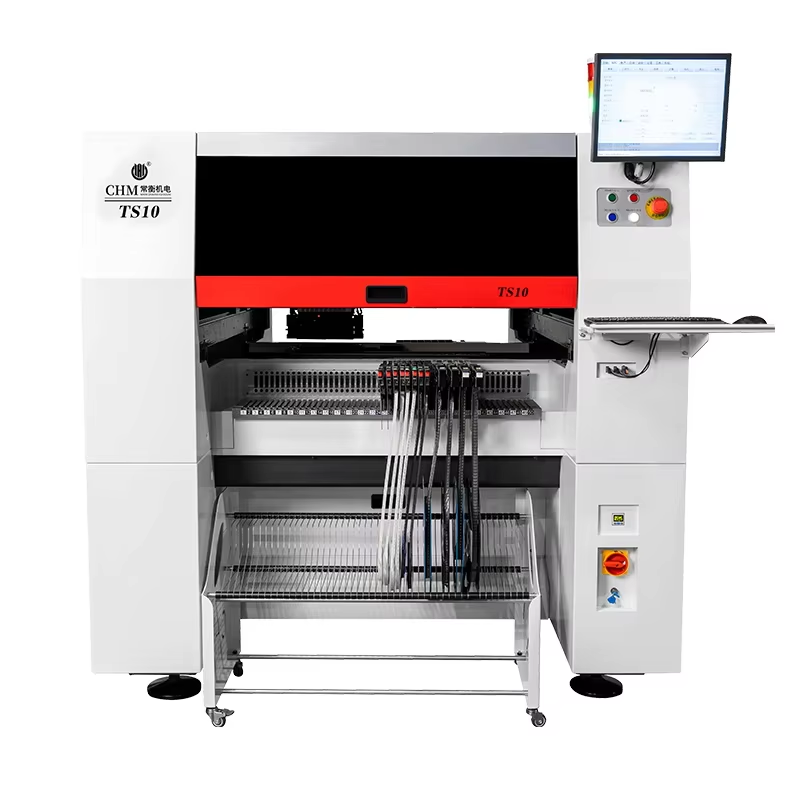
Pick and Place Machine: Understand Core Machine Types for Low-Volume, High-Mix PCB Production
Chip shooters: speed vs. flexibility trade-offs in prototyping and small-batch runs
When it comes to sheer speed, chip shooters are hard to beat, often placing over 50k components per hour (CPH). But there's a catch with their fixed head design that makes them pretty inflexible. These machines work best when dealing with large quantities of simple boards where all the parts fit the same footprint. Now switch gears to those situations where production runs are small and the product mix changes constantly. That's when chip shooters start showing their limitations. The need for constant setup changes means downtime piles up fast, eating into those impressive throughput numbers. Anyone working on prototypes or running batches below 500 units will tell you the same story: spending hours adjusting feeders and getting everything calibrated just isn't worth it compared to what those extra CPH actually deliver.
Precision placers: optimal accuracy and programmability for fine-pitch and mixed-component boards
When it comes to precision placers, accuracy takes precedence over speed. These machines focus on getting components placed within tight tolerances (around ±20-40 microns), relying on advanced vision systems and flexible multi-axis heads capable of handling all sorts of packages. Think everything from tiny 0201 passive components right up to complex QFNs featuring thermal pads and those tricky no-lead designs. The usual production rate sits somewhere between 10,000 to 20,000 components per hour, which works really well for smaller batches where getting things right the first time counts more than hitting maximum speeds. For industries under strict regulations such as medical devices or aerospace manufacturing, this kind of reliability isn't just nice to have it's absolutely essential. After all, fixing mistakes in these fields can cost upwards of seven hundred forty thousand dollars each time according to research published by the Ponemon Institute back in 2023.
Modular hybrid systems: scalable SMD Pick and Place Machine solutions for growing small-production shops
Modular hybrids bridge the gap between speed and precision by integrating configurable chip shooter and precision placement modules into a single platform. Shops can deploy only the capabilities they need—and scale as demand evolves—without replacing core hardware.
| System Type | Scalability Feature | Changeover Time | Best Fit |
|---|---|---|---|
| Entry Hybrid | 1–2 modules | <15 mins | Startups with <10 board designs |
| Mid-tier | Expandable feeder banks | <10 mins | Shops scaling to 50+ monthly runs |
| Advanced | Interchangeable placement heads | <5 mins | High-mix production (100 designs) |
This approach lowers initial capital risk while delivering a clear upgrade path—critical for lean operations balancing growth with cash flow discipline.
Evaluate Critical Operational Flexibility Factors
Feeder compatibility across tape, tray, and bulk formats for sub-500-unit batches
The flexibility of feeders plays a big role in how nimble manufacturers can be when dealing with small production runs. Modern equipment that handles tape, tray, and bulk feeding without needing to swap out hardware parts cuts down on changeover times significantly, somewhere around two thirds faster than traditional methods. Quick mount feeders that work universally along with smart recognition software remove those frustrating delays caused by specific formats. This means switching from QFP trays to tiny 0402 tape reels happens fast enough to fit into one job cycle instead of requiring separate setups. When companies are working on batches under 500 units, these improvements turn what used to take three hours of setup work into something that wraps up in just ninety minutes. The time saved translates directly into more productive hours available for actual manufacturing, which helps respond better to last minute design changes or rush orders from customers.
Vision system resolution and auto-alignment tolerance for 0201, QFN, and 0.4mm-pitch components
The quality of vision systems plays a huge role in successfully placing tiny components. Modern equipment featuring around 10 micron resolution combined with multiple lighting angles can spot reference marks and solder pad details even when dealing with tricky parts like asymmetric QFN packages or those with just 0.4mm spacing between pins. These systems come equipped with smart alignment features that fix rotation issues up to about 15 degrees and position errors below 25 microns, cutting down misplaced components to nearly nothing. What makes these machines stand out is their ability to recognize different pad shapes as they go along without needing any programming changes. Operators can switch from handling 0.3mm ball grid arrays to 0.4mm quad flat no-leads packages mid-production run without missing a beat. Considering how much money gets lost through component rework (roughly 17% of profits for smaller batches), having such tight tolerances isn't just nice to have anymore. It's becoming essential for protecting profit margins in today's competitive market.
Avoid Common Selection Pitfalls That Increase TCO for Small-Scale Operations
Misplacing emphasis on CPH over programming time, changeover latency, and operator skill requirements
Focusing too much on those high CPH numbers doesn't really help when dealing with low volume production where lots of different products are made. The problem is these speed measurements completely miss how much time gets eaten up by all the setup work, programming tasks, and switching between different product runs. For small batches, around 30 to maybe even 50 percent of actual working hours goes into these preparation activities rather than actual production. Take a machine that boasts 8,000 cycles per hour but needs almost two full hours just to get ready for each new board design through offline programming and adjusting feeders manually. That kind of thing makes the impressive spec sheet look pretty meaningless. And let's not forget about the hidden costs either. Machines that require special training for operators can easily cost around $15k annually per technician. What works better? Going for systems with easy offline programming options, feeders that don't need tools to adjust, and step-by-step guidance during setup processes. These features actually cut down on wasted time much more effectively than chasing those marginal improvements in CPH ratings.
Overlooking service support, spare parts availability, and local technical training for SMD Pick and Place Machine ownership
What happens after buying equipment affects how much it really costs over time. According to industry reports, when companies don't get proper service support, their expenses can jump as much as 40% throughout the product's life cycle. Equipment that needs special parts or depends on repair services only available abroad often sits idle for three weeks or more when something breaks down. For smaller operations, these delays are devastating because each lost production hour represents real money left on the table. Anyone thinking about making a purchase should always check out what kind of ongoing support comes with the machine they're interested in before signing anything.
- Same-day availability of high-wear consumables (nozzles, feeders, vision lenses)
- On-site technician dispatch within 48 hours
- Included operator certification and ongoing technical training
Local training alone reduces error-related rework by 27% and extends mean time between failures—making SLA terms as critical as placement accuracy specs.
FAQ
What type of machine suits small-batch PCB production?
Precision placers are optimal for small batches because they focus on accuracy over speed, crucial for industries like medical devices or aerospace manufacturing.
How does feeder flexibility impact production?
Feeder flexibility significantly reduces changeover times, enabling manufacturers to quickly adapt to different formats, saving time and increasing productivity.
How important is vision system resolution in PCB production?
High resolution in vision systems is essential for accurately placing tiny components, reducing errors, and protecting profit margins.
What should be prioritized over CPH in machine selection?
For small-scale operations, it's vital to prioritize programming time, changeover latency, and operator skill requirements over sheer speed (CPH).
Why is service support crucial for machine ownership?
Adequate service support minimizes downtime and reduces operational costs, making it a critical factor in total ownership cost evaluation.