
 EN
EN
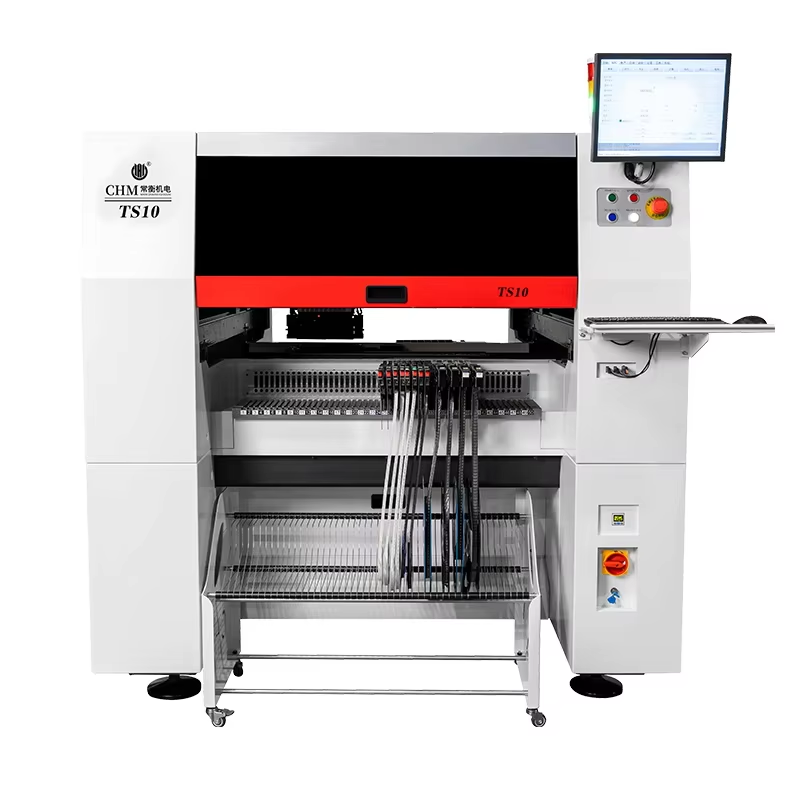
Chip Mounter Buying Guide: Placement Accuracy & Vision Intelligence – The Foundation of Yield Assurance
How ±X µm Placement Tolerance Affects BGA and 01005 Yield—Beyond Datasheet Claims
How accurately a chip mounter places components really affects how many good products come off the production line, particularly when dealing with tiny parts such as 01005 resistors measuring just 0.4 by 0.2 millimeters or those densely packed BGAs. Specifications usually state an accuracy range of plus or minus 15 micrometers, but experience tells another story. When placements drift past 25 micrometers out, manufacturers start seeing around 15% fewer working BGAs because solder tends to bridge between pads. With those super small 01005 components, even a 30 micrometer error means almost half the component's size is off track, which dramatically raises the chances of tombstoning issues during reflow. And here's something important that gets overlooked sometimes calibration checks need to happen while machines are running hot and vibrating, not just sitting still in controlled labs. That way we actually see what happens on the factory floor where things get messy.
Vision System Capabilities: 2D/3D Inspection, Fiducial Recognition Speed, and Real-Time Correction
Advanced vision systems prevent defects through three integrated functions:
- 2D/3D inspection: Captures coplanarity and pin alignment for QFNs and other leaded packages, identifying tilted placements before reflow.
- Fiducial recognition: High-speed cameras achieve sub-50 ms alignment per board, compensating dynamically for panel warping or rotation.
- Real-time correction: Uses closed-loop feedback to adjust nozzle position mid-placement—reducing placement errors by 40% compared to post-process correction alone.
Board Warpage Compensation: Why True Accuracy Requires Adaptive Calibration, Not Just High Nominal Specs
PCB panels get warped during thermal cycles, sometimes by as much as 150 micrometers. Static calibration just doesn't cut it when dealing with these kinds of dimensional changes. The newer adaptive systems actually use laser profilometers to track how the boards deform while they're working. These systems then make adjustments to both the Z height and placement angles on the fly. What does this mean practically? Manufacturers report around a 22% reduction in BGA voids compared to older fixed calibration approaches. When shopping for chip mounters, look for models equipped with live height sensors and smart algorithms instead of settling for equipment that claims ±10 micrometer accuracy but lacks real time adjustments. Experience shows that precision matters little if the machine can't adapt to changing conditions during actual production runs.
Throughput Performance & Production Flexibility for Modern SMT Lines
CPH Reality Check: Bridging Nominal Speed (e.g., 42,000 CPH) and Sustained Output Under Real-World Conditions
Peak speeds of around 42,000 components per hour definitely look impressive on paper, but what really matters is how well these machines perform day after day in real factories—not just during controlled tests. When we look at actual production floors, things get complicated fast. Changing feeders takes time, boards often sit waiting for processing, and those fancy vision systems need extra seconds to work their magic. All this adds up to about a 15-30% drop in real output for facilities running multiple product types simultaneously. Manufacturing lines dealing with both tiny 01005 passive components and big connectors run into serious roadblocks when switching back and forth. Pushing for super fast cycles can actually cause problems too, especially with those delicate fine pitch BGAs where even small misalignments lead to costly rework. That's why smart manufacturers invest in modular setups with buffer zones between stations to keep the whole line moving smoothly. Regular checkups on vacuum nozzles also help maintain steady operation since worn parts disrupt the pick and place rhythm so critical for quality assembly. At the end of the day, nobody cares about top speed numbers if the machine can't deliver reliable performance over long shifts.
Feeder Ecosystem Versatility: Seamless Support for Tape, Stick, Bulk, and Tray Feeding Across Component Types
A chip mounter’s feeder ecosystem determines its real-world flexibility. Leading systems support all major feeding methods simultaneously:
- 8 mm and 12 mm tape reels for high-volume ICs
- Stick feeders for LEDs and odd-form parts
- Bulk feeders for passive matrix trays
- Tray handlers for BGAs and QFNs
Manual work is basically eliminated when switching between different production runs, which can slash setup times anywhere from 30 to 40 percent depending on the situation. The system uses machine vision for automatic calibration that keeps parts placed within about 50 microns of their target position regardless of what kind of material is being processed. Feeder racks have been designed with universal connections so manufacturers can quickly switch from small batch testing to full scale manufacturing operations. Smart sensor technology watches for skipped components as they happen, catching problems early enough to stop defective placements altogether. Top tier systems bring together every possible feeding approach through common hardware and software standards. This means factories can run products made with completely different technologies side by side without sacrificing speed or efficiency, something that used to require expensive compromises in traditional manufacturing setups.
System Integration, Scalability, and ROI Optimization for Chip Mounter Investment
Real production efficiency isn't just about what's written on the spec sheet of individual machines. Getting these systems to work together smoothly with current SMT setups matters a lot too. When MES/ERP platforms connect properly with automated material handling systems, it stops information from getting stuck in isolated pockets and cuts down wasted time during production changes. The ability to scale operations shouldn't be overlooked either. Modular designs let manufacturers upgrade step by step, maybe adding extra feeder banks or better vision inspection modules without tearing everything apart and starting over. Looking at return on investment requires thinking beyond initial purchase price tags. A good TCO analysis should include things like annual energy bills (around $18k per year for those fast running machines), regular maintenance needs, and how much better quality products get made. Some companies find that paying 15 to 20 percent more initially actually saves them over 35 percent in operating costs down the road. Many manufacturing executives have seen their investments start paying off within just fourteen months thanks to scalable solutions that delay expensive new equipment purchases.
Reliability, Service Support, and Lifecycle Cost: Critical Non-Technical Factors in Chip Mounter Selection
When it comes to sustainable manufacturing, there are actually three key factors beyond just the technical specifications that really matter. First up is reliability. Keeping machines running consistently matters a lot for those high volume SMT lines. We're talking about facilities where stopping production for even an hour can cost upwards of $18k. That's why manufacturers look at machines with solid MTBF ratings and strong mechanical construction to avoid those unplanned shutdowns. Then there's service support. Having access to round-the-clock technical help, local stock of spare parts, and trained technicians nearby makes all the difference. Factories that don't have this kind of local support typically take 40% longer to fix problems when they arise. Lastly, looking at the whole lifecycle costs is crucial. This means considering how much energy each machine uses per component placed, regular maintenance needs, and how often parts need replacing over five to seven years. When companies build out their return on investment calculations including things like equipment depreciation, maintaining product yields, and service agreements, the math usually works out better for durable, well-supported chip mounting systems despite their higher upfront price tag.
FAQ Section
Why does placement accuracy matter in chip mounting?
Placement accuracy is critical because minor deviations can lead to defects such as solder bridging and tombstoning, especially with tiny components like 01005 resistors. These issues drastically affect the yield and quality of the finished product.
How do vision systems enhance chip mounter performance?
Vision systems provide 2D/3D inspections, high-speed fiducial recognition for alignment, and real-time corrections that reduce placement errors significantly. Such systems improve overall production quality and efficiency.
What is adaptive calibration and why is it important?
Adaptive calibration involves dynamically adjusting machine settings during production to compensate for board warpage and other changes. It ensures true accuracy, reducing defects like BGA voids and improving yield.
How is throughput performance typically reduced in real-world settings?
Throughput performance can be reduced by factors such as feeder changes, waiting times for boards, and extra seconds needed for advanced vision system processes. Real-world conditions usually lead to a 15-30% drop in nominal output figures.
Table of Contents
- Chip Mounter Buying Guide: Placement Accuracy & Vision Intelligence – The Foundation of Yield Assurance
- Throughput Performance & Production Flexibility for Modern SMT Lines
- System Integration, Scalability, and ROI Optimization for Chip Mounter Investment
- Reliability, Service Support, and Lifecycle Cost: Critical Non-Technical Factors in Chip Mounter Selection
- FAQ Section