
 EN
EN
Aligning SMT Line Design with DFM Principles for Seamless Transition
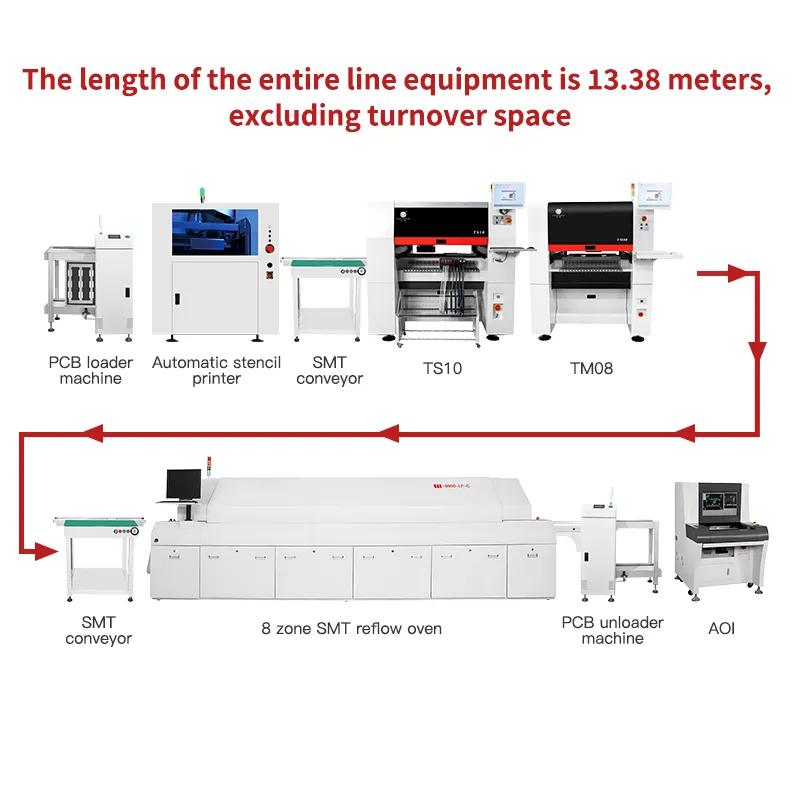
Why Prototyping and Production Create Workflow Fractures in SMT Line Operations
The prototyping and production phases tend to run into problems when working with Surface Mount Technology (SMT) lines. Designers want all sorts of flexibility during prototyping, but production needs everything standardized. This mismatch creates real headaches for getting products out the door on time. Take it from experience - many prototype designs completely overlook what automated machines can actually handle, which means going back to fix things manually when scaling up. These kinds of mismatches can really eat into changeover times, sometimes adding anywhere from half an hour to almost an hour extra per board. What's worse, there's this gap between what shows up in CAD files and what actually works on the factory floor. When engineers keep making rapid changes without checking if they can be manufactured properly, it leads to assembly issues down the road. We've seen yields drop by about 15% when moving from prototype to full production runs. And until engineering and manufacturing teams start speaking the same language about standards, those boards that looked great in testing will still end up failing when put through proper production validation tests.
Embedding Design for Manufacturability (DFM) Early to Standardize SMT Line Inputs
When companies apply Design for Manufacturability (DFM) right at the start of product development, they close the big gap between prototypes and real-world production. This approach makes sure what gets designed actually works with surface mount technology lines from day one. Without DFM, engineers often find themselves scrambling to fix problems late in the game. Fabrication files end up mismatched with real production specs, leading to costly mistakes when translating digital designs into physical products. Some essential tactics involve maintaining proper solder mask clearances (at least 0.15 mm) to stop solder bridges from forming, keeping components consistently oriented so pick-and-place machines work smoothly, and running thermal simulations ahead of time to catch potential reflow problems. Manufacturers who embrace DFM early typically see around 40 fewer prototype iterations and boost their first pass yield by about 22 percent. These improvements mean moving products from small batches to full scale manufacturing happens much quicker and with far fewer headaches along the way.
Standardizing the SMT Line Process Flow with Lean Methodologies
Integrating Kaizen, 5S, and Six Sigma into SMT Line SOPs
Lean methods help standardize operations on surface mount technology lines by cutting down on waste and inconsistencies wherever they appear. With Kaizen, teams spot problems in how solder paste gets applied and where components land on boards. Meanwhile, the 5S approach keeps feeder stations and tools organized through strict workspace discipline. And then there's Six Sigma's DMAIC framework which digs deep into why processes become unstable – something really important when placement accuracy drops below 10 microns since that directly affects product yields. All these techniques get built into day-to-day work routines covering things like checking components before assembly, scheduling regular stencil cleanings, and documenting temperature profiles during reflow. When companies first tried implementing all these together, they saw changeover times drop around 35%, plus defect rates fell by more than half in terms of defects per million opportunities.
Operator Training Aligned to OEE Drivers: Availability, Performance, and Quality
Cross-training technicians on SMT line diagnostics and SMED principles further enhances flexibility. In high-mix environments, such focused development has improved OEE by 18–27%, balancing skill deployment with real-time production demands.
Enabling High-Mix/Low-Volume Flexibility in the SMT Line
Resolving Feeder Reconfiguration Bottlenecks and Offline Setup Delays
When companies switch products too often, they hit serious roadblocks, especially when those feeders need to be reconfigured and everything comes to a grinding stop. The trick many plants have found works wonders is doing setup work offline. Technicians can get components ready and programs loaded while the main production line keeps running. This approach cuts down changeover times by about half compared to what was standard before. For the actual hardware, modular feeder carriages with those handy quick release features let operators swap things out in under five minutes most of the time. And when parts come packaged consistently on reels, loading becomes much smoother. Getting these setup tasks away from prime production hours makes a real difference for manufacturers dealing with lots of different product variants. Throughput stays steady even as product mixes change throughout the day.
Validating Changeover Sequences via Digital Twin Simulation for SMT Line Deployment
Digital twin tech lets manufacturers check out SMT line changes without any real world risks before they actually implement them on the factory floor. What engineers do is create these virtual copies of their production setup where they can run tests on how materials move around, spot possible collisions between components, and make sure all machines work together properly. They catch problems like misplaced feeders or misaligned conveyors long before anyone has to shut down the production line for fixes. The results speak for themselves really. Companies using this approach see about a quarter fewer defects when running products for the first time after changes. Plus it speeds things up when introducing new product versions without hurting those important OEE numbers that measure overall equipment effectiveness.
Measuring and Optimizing SMT Line OEE Across Transition Phases
Looking at Overall Equipment Effectiveness (OEE) when moving products from prototypes to full production reveals plenty of workflow problems that nobody notices otherwise. Prototype stages usually need lots of flexibility, but this comes at a cost. When scaling up production, inconsistent changeovers and messy material handling can drop OEE by anywhere between 15 and 30%. Most of this loss happens because machines keep stopping unexpectedly and placement accuracy just isn't good enough. Across the electronics manufacturing sector, companies typically hit around 70 to 80% OEE. The top performers manage to get above 85%, which is pretty impressive given how complicated these processes are. Teams that dig into what drives their OEE numbers at every stage find all sorts of bottlenecks waiting to be fixed. Sometimes it's those annoying delays while cleaning stencils, other times it's the time wasted reconfiguring feeders, or even issues with bad solder paste application. Keeping an eye on these metrics lets managers make smart decisions based on actual data instead of guesswork. Some factories have implemented Single Minute Exchange of Dies techniques and seen changeover times slashed by half to two thirds in practice. While tracking OEE gives valuable insights, it's important to remember that these numbers only tell part of the story about overall factory efficiency.
FAQ Section
Why is Design for Manufacturability (DFM) important in SMT line operations?
DFM ensures that designs are compatible with production technology, reducing errors and costly last-minute changes during the transition from prototype to production.
What are some benefits of applying Lean methodologies in SMT processes?
Lean methodologies like Kaizen, 5S, and Six Sigma help in reducing waste, minimizing defects, and improving efficiency, leading to decreased changeover times and enhanced product quality.
How can digital twin simulation benefit the SMT production line?
Digital twin simulation allows manufacturers to test changes virtually, identifying potential issues and improving coordination of machines without disrupting the actual production line. This leads to fewer defects and a smoother transition for new product versions.
What role does operator training play in improving OEE?
Proper operator training focuses on reducing downtime, optimizing cycle times, and minimizing defects, which directly impact the three pillars of OEE: Availability, Performance, and Quality.