
 EN
EN
Pick and Place Machine:Matching Feeder Type to Component Characteristics
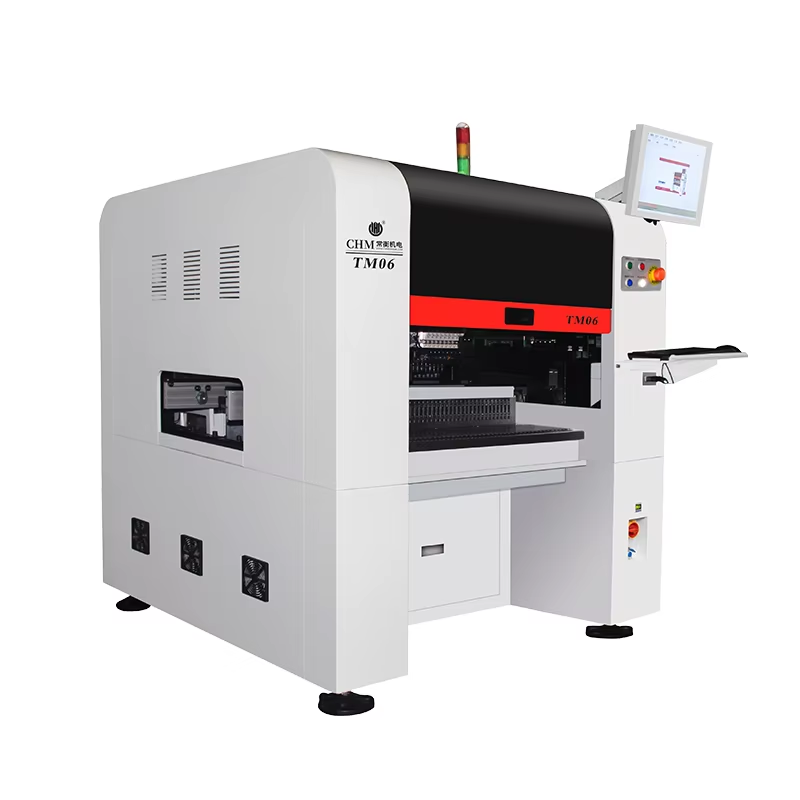
Tape, Tray, Tube, Vibratory, and Bulk Feeders: Functional Trade-offs for Precision Placement
Choosing the correct feeder makes all the difference when it comes to keeping pick and place machines accurate across different component types. Tape and reel systems work great for standard small to medium passive and active components, but run into trouble with weird shapes or fragile packages. Tray feeders are better at protecting delicate stuff and getting those parts oriented just right, which matters a lot for things like BGAs and QFNs that need special handling. Tube feeders can manage cylindrical parts, polarized components, or anything with leads such as diodes and transistors, although operators have to manually reload them most of the time and automation options remain limited. Vibratory bowl feeders will take almost any shape thanks to their adjustable tracks, but come with downsides like annoying vibration noises and inconsistent feeding when loads change throughout the day. Bulk feeders excel in high volume situations but tend to sacrifice placement precision, particularly noticeable with fine pitch or tiny ICs where parts get tangled up or end up in wrong orientations. When everything runs smoothly, tape systems hit around 0.05mm accuracy, while bulk methods might drift past 0.1mm with those super small 0201 components and below.
How Size, Tolerance, Packaging Density, and Polarity Affect Feeder Selection for Pick and Place Machines
Component characteristics directly determine feeder suitability:
- Size constraints: Micro 01005 chips (<0.4mm) require specialized tape feeders with enhanced vision alignment and low-vibration sprocket drives.
- Tolerance thresholds: Components with dimensional tolerances tighter than ±0.025mm demand servo-driven feeders with closed-loop positional feedback to ensure consistent indexing.
- Packaging density: High-density reels (5,000+ units) reduce changeover frequency but increase mechanical stress and vibration risk during high-speed indexing—requiring dampened mounting and tension-controlled drive systems.
- Polarity management: Asymmetric or polarized parts (e.g., diodes, electrolytic capacitors) necessitate orientation verification—best supported by tray or tube feeders with integrated vision or mechanical keying.
Improper feeder–component matching accounts for 23% of placement errors in production environments. For instance, vibratory feeders misorient non-uniform connectors at a rate 7× higher than programmable tray systems—highlighting how strategic feeder selection prevents both throughput loss and costly rework.
Strategic Feeder Layout to Maximize Pick and Place Machine Throughput
Reducing Head Travel Time: Data-Backed Layout Principles That Cut Average Movement by 18–32%
Where feeders are placed really affects how fast pick and place machines can work. Bad layout designs make the placement heads take longer routes that aren't straight lines, which just adds time to each cycle without making the placements any better. Studies show that when we put frequently used parts next to each other in feeder slots, the heads don't have to travel as far. Take power delivery networks for instance. If we group all those resistors and capacitors together instead of spreading them out across different feeder positions, the robot doesn't need to zigzag around so much. Good layouts organize things based on zones. We group components according to what they do (power stuff here, signal stuff there, RF components over there), how often they get used, and where they actually sit on the PCB. This method of maximizing pick density was mentioned in last year's Electronics Assembly Journal and cuts down head movement somewhere between 18% and 32%. When the feeder arrangement matches up with how components are laid out on the PCB itself (like arranging feeders in the same sequence as the component footprints along one side of the board), robots move more smoothly without running into problems. Companies that have tried this approach typically see their throughput jump anywhere from 3,100 to 5,400 placements per hour just by rearranging their feeder bays.
Balancing Speed, Flexibility, and Uptime in Pick and Place Machine Feeding
The Throughput–Changeover Trade-off: Tape Feeders (42,000 CPH) vs. Modular Tray Systems (7.3-Minute Faster Setup)
When it comes to pick and place operations, there's really no getting around the basic dilemma between maximum speed and how flexible the system can be. Tape feeders are amazing when it comes to throughput, hitting as high as 42 thousand components per hour for those standard large volume jobs. But here's the catch they need a ton of setup time whenever switching products. On the flip side, modular tray systems actually save about 7 minutes 30 seconds on average for each changeover according to IPC-9850 standards. These systems use those handy interchangeable cartridges that are already loaded. The downside? Their placement speeds usually fall somewhere between 28k and 35k CPH because the indexing mechanism takes extra time, adding roughly 0.8 to 1.2 seconds for every component retrieval. So manufacturers have to weigh whether faster changeovers justify the slightly lower overall speed.
Feeder-Induced Downtime: Why High-Speed Pick and Place Machines Often Underperform on Uptime
The reliability of feeders plays a huge role in how well overall equipment effectiveness works for those fast moving pick and place systems. When looking at machines capable of over 35 thousand cycles per hour, they face around 2.3 times more problems caused by feeders compared to machines running at medium speeds. Most often these issues come from tape getting stuck during advancement (about 34% of cases) or when parts don't feed properly through pneumatics (around 29%). The downtime from all this adds up too, cutting into operational time between 12% and 18%. According to research from Ponemon Institute back in 2023, this kind of interruption costs roughly seven hundred forty thousand dollars each year just in lost manufacturing output. To tackle these problems before they happen, manufacturers need to implement certain preventive measures including:
- Real-time vision validation of component presence and orientation before pickup
- Self-adjusting tension arms that dynamically compensate for tape stretch or slippage
- Predictive maintenance algorithms trained to detect feeder wear up to 8 hours before failure
Integrating flexible feeder innovations—such as those enabling mixed-part feeding without physical retooling—can reduce misalignment incidents by 41%, though sustained throughput generally plateaus at ~32,000 CPH due to inherent motion control and sensing limitations.
FAQ
What is the main role of feeders in pick and place machines?
Feeders are critical for the correct placement of components on pick and place machines, ensuring precision and preventing errors during the assembly process.
How do tape feeders differ from modular tray systems?
Tape feeders offer higher throughput but require significant setup time, whereas modular tray systems support quick changeovers but have lower placement speeds.
What common issues cause feeder-induced downtime?
Common problems include tape jams and improperly feeding parts through pneumatics, which can result in significant machine downtime.
Why is strategic feeder layout important?
Strategic layout reduces head travel time and optimizes machine throughput, significantly impacting overall production efficiency.