
 EN
EN
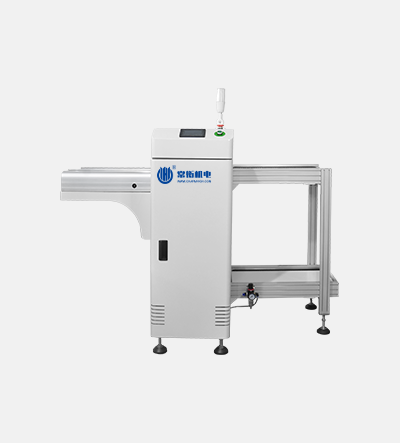
Selecting High-Speed SMT Equipment for Optimal Throughput and Precision
Balancing placement speed (≤0.08 sec/place) and accuracy (±25 µm) for complex, high-volume PCBs
Achieving peak PCB assembly efficiency requires SMT equipment that simultaneously delivers ultra-fast placement cycles and microscopic precision. Modern high-speed pick-and-place machines must maintain ≤0.08-second component placement while holding ±25 µm accuracy to handle miniaturized components like 01005 chips and BGAs. This dual capability prevents throughput bottlenecks while eliminating solder bridging and misalignment defects that plague complex boards. Industry data reveals that a 10% accuracy improvement reduces rework costs by $18k annually per production line Electronics Manufacturing Journal, 2024. Advanced vision systems with real-time feedback loops enable this precision-speed equilibrium, dynamically compensating for thermal drift and vibration during high-velocity operation.
Evaluating ROI using throughput, uptime, and defect reduction—key metrics for automatic SMT production line justification
When justifying investments in automatic SMT production lines, manufacturers should analyze three core ROI metrics:
- Throughput: Calculated as components-per-hour (CPH), where 80,000+ CPH machines reduce unit costs by 22% versus standard equipment
- Uptime: Systems with 95% operational availability prevent $740k annual losses from unexpected downtime Ponemon Institute, 2023
- Defect reduction: Each 1% defect decrease yields $15k yearly savings through reduced scrap and rework
| Metric | Baseline | High-Performance Target | Annual Impact |
|---|---|---|---|
| Throughput | 50,000 CPH | 85,000+ CPH | +34% capacity |
| Uptime | 88% | ≥95% | $310k savings |
| Defect Rate | 850 ppm | <200 ppm | $97k quality savings |
Closed-loop process control systems amplify these benefits by automatically adjusting placement pressure and solder paste deposition. This data-driven approach typically delivers 18-month payback periods for premium SMT equipment.
Optimizing the Core SMT Process Trio to Maximize PCB Assembly Efficiency
Stencil printing: solder paste volume control and alignment fidelity as yield foundations
Precise stencil printing establishes the foundation for PCB assembly efficiency. Consistent solder paste deposition within ±10% volume tolerance prevents defects like bridging or insufficient joints. Alignment fidelity under 25 µm ensures components bond correctly during reflow. Industry studies show improper paste application causes 43% of SMT defects, making this step critical for maintaining 99% first-pass yield in automatic SMT production lines. Advanced laser-cut stencils with nano-coatings further optimize release characteristics, directly boosting throughput.
Reflow profiling: thermal uniformity’s direct impact on line speed and defect rate (e.g., tombstoning, voiding)
Thermal management during reflow directly dictates both line speed and defect rates. Uniform temperature gradients (±5°C across PCBs) prevent tombstoning and voiding—defects increasing by 15–30% with uneven heating. Optimized profiles balancing ramp rates and peak temperatures (typically 230–250°C) enable 20% faster conveyor speeds while reducing rework. Real-time thermal mapping using embedded sensors in modern ovens sustains this precision, allowing high-speed pick-and-place machines to maintain peak output without quality tradeoffs.
Integrating Automated Inspection and Smart Line Balancing
AOI and X-ray inspection in closed-loop feedback systems to sustain 99.5% first-pass yield without slowing the automatic SMT production line
Automated Optical Inspection (AOI) and X-ray systems form the cornerstone of high-yield PCB assembly when integrated with real-time process control. By embedding these inspection technologies directly into the production flow, manufacturers achieve continuous defect detection without creating bottlenecks. Closed-loop feedback instantly adjusts placement parameters and solder paste application when irregularities exceed tolerance thresholds. This synchronization between inspection stations and production equipment enables dynamic line balancing—automatically redistributing tasks when cumulative tolerances approach critical levels.
The result is sustained first-pass yields exceeding 99.5% while maintaining line velocity, as immediate corrections prevent defect propagation downstream. This real-time process optimization directly impacts PCB assembly efficiency by eliminating traditional stoppages for quality verification. Automated systems achieve this through simultaneous monitoring of solder joint integrity, component placement accuracy (±25 µm), and thermal profile compliance across all boards. This integrated approach ensures consistent throughput while virtually eliminating rework queues characteristic of post-production inspection methodologies.
Sustaining Performance: Calibration, Maintenance, and Changeover Optimization
Maintaining peak PCB assembly efficiency requires rigorous calibration protocols and proactive maintenance strategies for SMT equipment. Regular calibration ensures placement accuracy remains within ±25 µm tolerances—critical for high-yield production—while predictive maintenance schedules minimize unplanned downtime in automatic SMT production lines. For high-speed pick-and-place machines, optimized changeover procedures reduce transition times by 40–60% through standardized tooling and digital workflow integration, directly boosting throughput. Implementing closed-loop calibration systems that automatically adjust machine parameters based on real-time performance data sustains 99% operational efficiency across thermal profiling and solder paste deposition stages. This holistic approach prevents costly defects and maximizes ROI by extending equipment lifespan while maintaining consistent precision in high-volume PCB manufacturing.
FAQ
What is the significance of maintaining ±25 µm accuracy in SMT equipment?
Maintaining ±25 µm accuracy ensures precise placement of miniaturized components like 01005 chips and BGAs, preventing solder defects and alignment issues, which are critical for high-yield manufacturing.
How do throughput and uptime impact the ROI of SMT production lines?
High throughput reduces unit production costs, while increased uptime minimizes operational losses, enhancing the overall return on investment.
Why is stencil printing critical for PCB assembly efficiency?
Stencil printing directly affects solder paste deposition consistency and alignment, which are essential for preventing defects like solder bridging and ensuring optimal reflow outcomes.
What role do AOI and X-ray inspection play in sustaining high yields?
AOI and X-ray systems detect defects in real-time, enabling closed-loop feedback that adjusts production parameters immediately, maintaining yields exceeding 99.5% without slowing production.
What benefits do closed-loop calibration systems offer in SMT equipment?
Closed-loop calibration systems automatically adjust machine parameters based on performance data, ensuring precision, reducing downtime, and maintaining overall operational efficiency.