
 EN
EN
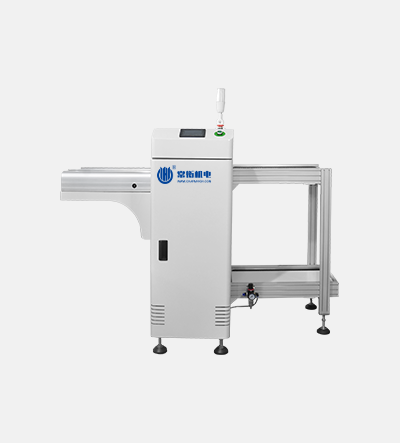
Core Types of PCB Assembly Machines and Their Operational Niches
Chip Shooters vs. Flexible Precision Placers: Matching Speed, Accuracy, and Component Range to Production Needs
For high volume manufacturing operations, chip shooters are commonly used equipment that can reach impressive speeds over 40,000 components per hour when dealing with standard passive parts such as resistors and capacitors. These machines work really well for producing consumer electronics in bulk situations where getting things out fast matters most. On the other hand, flexible precision placers sacrifice some speed (usually between 5,000 to 20,000 CPH) but gain versatility. They handle all sorts of components ranging from tiny 01005 chips right up to big BGAs and various connectors. What makes these placers special is their sophisticated vision systems combined with multiple nozzles that ensure placement accuracy within about 25 microns. This level of precision becomes absolutely critical in industries like medical device manufacturing or aerospace where exactness counts more than sheer quantity. When choosing between these options, manufacturers need to look at their specific production needs. Chip shooters tend to cut costs per unit during steady production runs with good yields, whereas flexible placers help save time switching between different product types in mixed manufacturing settings.
Modular Hybrid PCB Assembly Machines: Supporting Mixed-THT/SMT, Rigid-Flex, and Low-Volume High-Mix Scenarios
Hybrid modular PCB assembly systems come equipped with special tools that can work with both SMT and THT components all on one machine. By combining these functions into a single unit, manufacturers no longer need separate production lines for boards that mix technologies. This saves about 35% of factory floor space while still maintaining around 50 microns of placement accuracy. The machines have adjustable feeders and interchangeable heads that work well with different types of circuit boards including rigid ones, flexible ones, and those that combine both features. These capabilities are particularly important for making automotive parts and small wearable devices. When dealing with small batches under 500 boards at a time, automated recipes cut down setup time significantly. This makes it possible to produce prototypes and custom industrial controls without breaking the bank, something that would be tough to justify using conventional manufacturing setups.
Key Functional Capabilities That Define High-Performance PCB Assembly Machines
Intelligent Feeding & Multi-Nozzle Placement: Enabling 60,000 CPH Throughput Without Compromising Placement Repeatability
Today's PCB assembly machines can crank out components at lightning speeds thanks to smart feeder systems that automatically tweak tape tension and keep parts properly aligned. These machines typically have multi-nozzle heads with around 8 to 16 separate spindles working together, allowing them to grab and place multiple components at once. This setup lets factories hit impressive rates over 60 thousand components per hour. Older models with just one head struggled to maintain accuracy when running fast, but these new systems stay within about 25 microns of precision even at top speed because they actively dampen vibrations during operation. The improvements don't stop there either. Switching between different component reels takes about 40% less time now, and manufacturers aren't stuck at the old limit of 35 thousand CPH anymore since alignment issues at high speeds have basically been eliminated.
Real-Time Vision Guidance and Closed-Loop Correction: Reducing Placement Defects by 40% Across Fine-Pitch and Miniaturized Components
Modern machine vision systems now scan parts at around 200 frames each second while they're being placed, spotting tiny deviations down to less than a millimeter using imaging with 10 microns per pixel resolution. The system sends this information back to correction algorithms that tweak the nozzle position just before placing components on the board. This matters a lot when dealing with those super small 01005 packages measuring only 0.4 by 0.2 mm, or even tinier 0.3 mm pitch ball grid arrays. When combined with data from solder paste inspections, such systems cut down on placement errors by somewhere north of 40 percent according to industry benchmarks released last year. Flex PCB assemblies benefit greatly from this technology too since temperature changes can actually move boards up or down about 50 microns during manufacturing. Older equipment simply couldn't handle these shifts in real time like today's advanced systems do.
End-to-End SMT Process Integration Enabled by Smart PCB Assembly Machines
Synchronized Data Flow from SPI and Stencil Printing to AOI and Rework: How Modern PCB Assembly Machines Act as the SMT Line’s Central Intelligence Hub
Modern PCB assembly equipment has started merging those separate SMT processes into one smooth operation through real time information sharing across all the key components including stencil printers, solder paste inspection systems (SPI), automated optical inspection units (AOI), and various rework stations. When SPI detects issues with how solder paste was applied, it automatically adjusts the settings on the pick and place machines right away. This prevents bad component placements before they happen. Industry reports suggest this kind of system cuts down on corrections needed by about 40 to 50 percent. These machines act as sort of control centers for the whole process, matching up what AOI finds with specific rework tasks so there's no waiting around for someone to interpret results manually. Some top tier systems go further still by looking at past performance data to spot problems before they arise and make adjustments ahead of time. What we see in practice is better overall efficiency and much higher quality control standards. Production lines can switch between different products roughly 20 to 30% quicker without compromising on quality, which matters a lot in applications where defects simply aren't acceptable.
Tangible Manufacturing Efficiency Gains Delivered by Next-Gen PCB Assembly Machines
Next-generation PCB assembly machines deliver measurable operational improvements through three core mechanisms:
- Throughput acceleration via multi-nozzle placement heads and intelligent feeders, enabling 60,000 components per hour (CPH) while maintaining micron-level precision—a 300% increase over legacy systems.
- Error suppression through closed-loop vision systems that reduce misalignment defects by 40–70%, as reported in the Journal of Electronics Manufacturing (2023), virtually eliminating rework costs for fine-pitch components.
- Resource optimization with AI-driven material dispensing that cuts solder paste waste by 35% and reduces energy consumption per unit by 22% through adaptive power management.
These gains collectively compress production cycles by 30% while scaling efficiently from prototypes to high-volume runs—proving indispensable for manufacturers navigating component miniaturization and supply-chain volatility.
Frequently Asked Questions (FAQ)
What is the difference between chip shooters and flexible precision placers?
Chip shooters are high-speed machines designed for volume production with standard components, while flexible precision placers prioritize versatility and accuracy for a wider range of components, making them ideal for industries where precision is critical.
How do modular hybrid PCB assembly machines save factory space?
These machines combine SMT and THT capabilities, eliminating the need for separate production lines, which results in significant factory floor space savings.
What role does intelligent feeding play in PCB assembly machines?
Intelligent feeders adjust tape tension automatically, ensuring accurate alignment of components, thereby enabling high-speed operation while maintaining precision in placement.
How does real-time vision guidance reduce placement defects?
Real-time vision systems scan components during placement, detecting deviations and allowing for immediate corrections, significantly reducing the rate of misplacements and defects.
How do next-generation PCB assembly machines optimize resource usage?
These machines use AI-driven systems to minimize solder paste waste and optimize energy consumption, contributing to overall resource efficiency and cost savings.
Table of Contents
- Core Types of PCB Assembly Machines and Their Operational Niches
- Key Functional Capabilities That Define High-Performance PCB Assembly Machines
- End-to-End SMT Process Integration Enabled by Smart PCB Assembly Machines
- Tangible Manufacturing Efficiency Gains Delivered by Next-Gen PCB Assembly Machines
-
Frequently Asked Questions (FAQ)
- What is the difference between chip shooters and flexible precision placers?
- How do modular hybrid PCB assembly machines save factory space?
- What role does intelligent feeding play in PCB assembly machines?
- How does real-time vision guidance reduce placement defects?
- How do next-generation PCB assembly machines optimize resource usage?