
 EN
EN
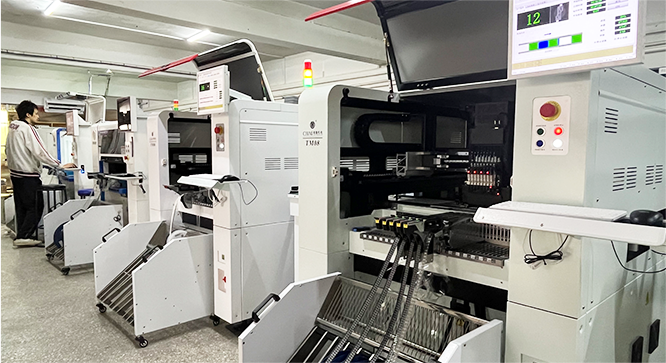
Why SMT Machine Maintenance Starts with Discipline—Not Just Tools
Many assume that effective SMT machine maintenance hinges solely on advanced diagnostic tools or expensive spare parts. This overlooks a fundamental truth: consistent discipline in daily routines prevents more failures than reactive repairs ever can. Without operator vigilance and structured habits, even the most sophisticated pick-and-place systems degrade rapidly. The average cost of unplanned manufacturing downtime now exceeds $740k annually (Ponemon Institute 2023), often traced back to overlooked basics like skipped inspections or delayed cleaning.
True reliability emerges when teams treat maintenance as a non-negotiable ritual, not an interruption. Operators who methodically verify nozzle vacuum pressure, feeder alignment, and dew point levels before each shift build a defensive wall against cascading failures. This discipline transforms subtle anomalies—a 0.15mm placement drift or faint air leak—into actionable insights rather than crisis triggers. When maintenance transcends being a task and becomes a culture, you gain more than machine longevity; you secure uninterrupted production flow and predictable costs. Mastering this mindset precedes every technique in the SMT daily checklist.
The SMT Daily Checklist: Pre-Startup Inspections That Prevent Downtime
Air Supply & Vacuum System: Dew Point, Pressure Stability, and Leak Detection
Begin each shift by verifying air compressor dew point stays below +3°C to prevent moisture-induced nozzle freezing or pneumatic failures. Confirm pressure gauges maintain consistent readings within ±0.07 bar specifications—fluctuations signal regulator wear or pipe blockages. For vacuum integrity checks, run nozzle suction tests before component placement using a digital manometer. A drop exceeding 5 kPa from baseline indicates leakage at seals, connectors, or worn pistons requiring immediate replacement to avoid mis-picks. Log deviations using automated monitoring tools where available.
Nozzle Tips, Feeders, and Optics: ESD-Safe Cleaning Using ISO Class 5 Standards
Inspect nozzle tips for chipped edges or solder residue accumulation using 10x magnification—worn tips shift placements by ±0.1 mm, compromising fine-pitch soldering. Clean feeders weekly with ionized air blowers and static-dissipative wipes to prevent misfeeds from debris blocking tape advance mechanisms. For optics, wipe lens surfaces using lint-free swabs in ISO Class 5-certified laminar flow environments. This prevents stray particles from distorting vision-alignment systems. Recalibrate laser sensors quarterly against NIST traceable standards to maintain <5 µm placement precision critical for 01005 components.
Pick and Place Machine Maintenance: Prioritizing High-Wear Subsystems
Nozzle Vacuum Integrity and Tip Wear Assessment
Daily vacuum pressure verification prevents component misplacement—a single leaking nozzle can cause 15% placement errors. Measure suction force with a digital manometer during idle cycles, targeting manufacturer-spec ranges (typically 70–90 kPa). Inspect nozzle tips under 10x magnification for micro-chips affecting centering accuracy. Replace worn tips when diameter tolerance exceeds ±0.05 mm, as deformed edges cause skewed pickups. Implement tip rotation schedules to distribute wear evenly across your nozzle inventory.
Motion System Care: Axis Lubrication, Belt Tension, and Rail Alignment (±0.02 mm)
Apply lithium-based grease to linear guides quarterly using calibrated dispensers—over-lubrication attracts debris that accelerates wear. Verify belt tension with a frequency tension meter monthly, maintaining 240 ± 10 Hz to prevent slippage. Check rail parallelism with laser alignment tools, correcting deviations beyond ±0.02 mm immediately. Such precision prevents cumulative placement drift, which accounts for 34% of machine recalibrations according to the 2023 SMT Assembly Benchmark. Record calibration results in maintenance logs to identify degradation trends.
From Daily Checks to SMT Machine Troubleshooting: Recognizing Early Failure Signals
Linking Subtle Anomalies—e.g., 0.15 mm Placement Offset—to Root Causes Like Encoder Drift or Seal Leakage
Systematic daily checks transform minor irregularities into diagnostic clues. A recurring 0.15 mm placement offset, for instance, might seem negligible—but research shows such deviations often precede catastrophic failures. When technicians spot this anomaly alongside inconsistent vacuum readings or slight axis vibrations, it points directly to root causes like:
- Encoder calibration drift from particulate contamination
- Worn pneumatic seals causing pressure fluctuations (±0.02 PSI)
- Motor bearing wear inducing positional errors
Tracking these patterns through maintenance logs enables predictive interventions. Correcting seal leakage during scheduled downtime costs 90% less than emergency repairs post-failure. This disciplined linkage of daily data to subsystem health turns routine inspections into your most powerful SMT machine troubleshooting strategy.
FAQ
Why is discipline crucial in SMT machine maintenance?
Discipline ensures consistent adherence to maintenance routines, preventing minor issues from escalating into major failures, thereby reducing downtime and costs.
What are key checks in the SMT daily checklist?
Essential checks include verifying air supply parameters, inspecting nozzle tips and feeders, and cleaning optics to ensure the machine operates seamlessly.
How often should nozzle tips be inspected and replaced?
Inspect nozzle tips daily using magnification tools and replace them when their diameter tolerance exceeds ±0.05 mm to maintain accurate placements.
What role does lubrication play in motion system care?
Proper lubrication prevents wear in linear guides and reduces cumulative placement drift. Over-lubrication, however, can attract debris that amplifies wear.
How do daily checks prevent catastrophic failures?
By detecting early anomalies, such as placement offsets or vacuum leaks, daily checks allow for timely interventions, minimizing risks of major breakdowns.