
 EN
EN
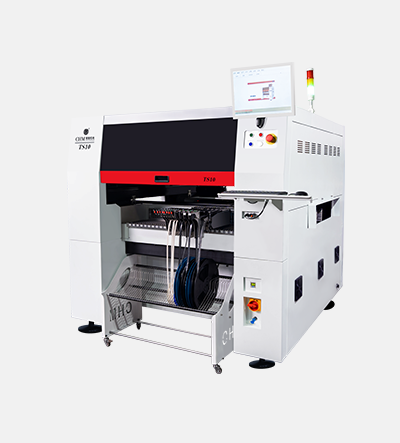
Essential SMT Line Equipment for a Functional Beginner Setup
Solder Paste Printer: Precision Foundation for Reliable PCB Assembly Line
A solder paste printer applies precise solder paste deposits through a stencil onto PCB pads—the foundational step that directly influences solder joint reliability. Automated printers maintain consistent ±0.1mm deposit tolerances, which is critical because paste volume deviations exceeding 15% contribute to 74% of assembly defects (Industry Benchmark Study 2024). Beginners should prioritize machines with automatic stencil alignment and programmable squeegee pressure control—features that prevent smearing and support fine-pitch components down to 0.4mm.
Pick-and-Place Machine: Core of Component Placement in Every SMT Production Line
This robotic system positions surface-mount devices (SMDs) onto pasted PCBs at speeds exceeding 25,000 components per hour. Vision-guided models achieve ±0.025mm placement accuracy—essential for micro-components like 0201 chips and smaller. For beginner setups, look for:
- Feeder capacity of 40+ slots to handle diverse part reels
- Multi-nozzle configurations or automated nozzle changers supporting component sizes from 0.4mm to 15mm
- Native support for standard .XYRS placement files
Modular architectures allow cost-effective scaling—adding feeders, vision modules, or speed upgrades as production demand grows.
Reflow Oven: Critical Thermal Process That Finalizes SMT Line Equipment Functionality
After placement, the reflow oven melts solder paste via a precisely controlled thermal profile. A well-tuned curve prevents tombstoning, voids, and cold joints. The four-phase process is defined by industry-standard reflow guidelines:
| Phase | Temperature Range | Function |
|---|---|---|
| Preheat | 1.5–3°C/sec rise | Activates flux solvents |
| Soak | 150–180°C | Evaporates volatiles |
| Reflow | 220–250°C peak | Forms metallurgical solder bonds |
| Cooling | <6°C/sec descent | Solidifies joints without stress |
Beginner setups benefit most from convection ovens with ±2°C zone stability—ensuring repeatable results across varying PCB thicknesses and minimizing thermal shock risks.
Quality Assurance SMT Line Equipment That Protects Yield and Reduces Rework
Solder Paste Inspection (SPI): First-Line Defense in Any Beginner SMT Setup
SPI systems verify solder paste volume, alignment, and shape before component placement—making them the first true quality gate in your SMT line. Using 3D imaging, these tools detect insufficient deposits, misregistration, and bridging risks—the root causes of ~70% of rework in electronics assembly. Early SPI integration reduces downstream defects by up to 85%, preserving yield and stabilizing process capability. Tabletop SPI units offer accessible entry points for beginners, often with flexible pay-per-use options and seamless compatibility with entry-level printers.
Automatic Optical Inspection (AOI): Post-Reflow Verification for Robust PCB Assembly Line Output
AOI serves as the final automated quality checkpoint—scanning boards after reflow to identify placement and soldering defects that escape visual inspection. High-resolution cameras reliably detect:
- Misaligned or tombstoned components
- Solder bridges and insufficient fillets
- Missing parts and polarity errors
Unlike manual checks, AOI delivers consistent, data-rich feedback—including real-time defect maps—that enables rapid root-cause analysis and process correction. Compact, entry-level AOI systems provide this capability without demanding factory-floor space—ideal for startups and hobbyists aiming for continuous improvement without sacrificing output integrity.
Building a Minimal Viable SMT Production Line: Smart Trade-offs for Startups and Hobbyists
Creating a functional SMT production line on a limited budget hinges on prioritizing core equipment—solder paste printer, pick-and-place machine, and reflow oven—with entry-level configurations typically ranging from $15,000 to $25,000. Modular designs are strongly recommended: they preserve initial affordability while enabling targeted upgrades (e.g., additional feeders, enhanced vision, or faster placement heads) as throughput and complexity increase.
| Approach | Initial Cost Range | Scalability | Ideal Use Case |
|---|---|---|---|
| Manual Setup | $5,000–$10,000 | Low | Prototyping, <5 boards/day |
| Hybrid Automation | $15,000–$25,000 | Medium | Small batches, mixed components |
| Phased Expansion | $20,000+ | High | Growing volumes with TCO optimization |
Prioritize Total Cost of Ownership (TCO) over upfront price—lower-cost machines often drive higher long-term costs through increased rework, calibration labor, and downtime. Leasing, pay-per-use, or semi-automated options (e.g., basic pick-and-place paired with trained manual inspection) can deliver 95% accuracy in low-volume runs while preserving capital. For hobbyists, modular reflow ovens with programmable profiles deliver professional-grade thermal control without industrial-scale investment. Always validate flexibility and integration readiness through vendor-led demos before procurement.
Frequently Asked Questions (FAQs)
What is the main purpose of a solder paste printer in an SMT line?
A solder paste printer ensures precise application of solder paste onto PCB pads, which directly impacts the reliability of solder joints.
Why is modular equipment important for beginners in SMT production?
Modular equipment allows beginners to start at an affordable investment level and scale as needed by adding upgrades to handle increased production demands.
What are the suggested budget ranges for beginner SMT setups?
Beginner SMT setups generally range from $15,000–$25,000 for a hybrid automation approach. More budget-friendly manual setups may cost between $5,000–$10,000.
How do SPI and AOI systems improve PCB assembly quality?
SPI systems inspect solder paste deposits before placement to reduce defects, while AOI systems perform post-reflow checks to catch component and soldering issues missed by manual inspections.
What is the importance of Total Cost of Ownership (TCO) in selecting SMT equipment?
TCO emphasizes the long-term costs of ownership, including maintenance, rework, and downtime, rather than focusing solely on the upfront price when choosing SMT equipment.
Table of Contents
- Essential SMT Line Equipment for a Functional Beginner Setup
- Quality Assurance SMT Line Equipment That Protects Yield and Reduces Rework
- Building a Minimal Viable SMT Production Line: Smart Trade-offs for Startups and Hobbyists
-
Frequently Asked Questions (FAQs)
- What is the main purpose of a solder paste printer in an SMT line?
- Why is modular equipment important for beginners in SMT production?
- What are the suggested budget ranges for beginner SMT setups?
- How do SPI and AOI systems improve PCB assembly quality?
- What is the importance of Total Cost of Ownership (TCO) in selecting SMT equipment?