
 EN
EN
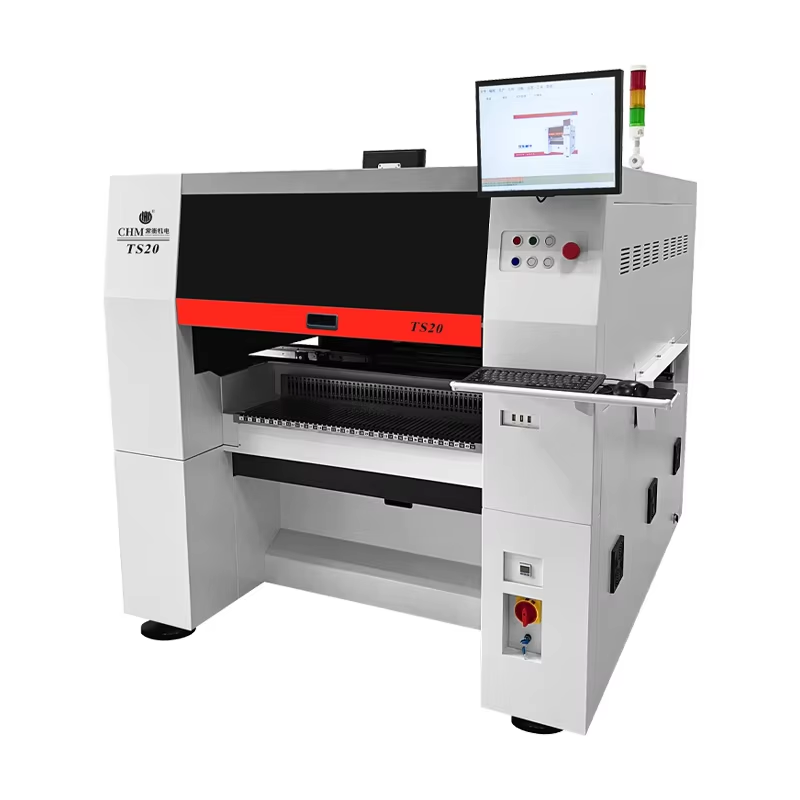
Speed Requirements: Matching Throughput to Your Production Line
Understanding Key Metrics–CPH, UPH, and Real-World Line Balancing
Choosing the right PCB assembly machine involves looking at numbers like components per hour (CPH) and units per hour (UPH), but these stats don't tell the whole story. What really matters is how well everything works together on the production floor. A machine claiming 50,000 CPH sounds impressive until it turns out the reflow oven or inspection station can't keep up. To get the most out of equipment, manufacturers need to map out every step in the SMT process against their actual production goals. Take a common scenario where paste printing takes 45 seconds per board versus 30 seconds for pick-and-place operations. Suddenly the printer becomes the weakest link in the chain. Most factories find they're lucky to hit 70-85% of those manufacturer specs because of all sorts of little issues that crop up daily. Material handling problems, setup changes between runs, and those pesky short stoppages all eat into productivity. Smart manufacturers look for machines with built-in buffer areas and conveyor systems that stay in sync so production keeps moving even when something minor goes wrong.
Bottleneck Analysis Across SMT Stages to Avoid Over- or Under-Specifying Your PCB Assembly Machine
A good bottleneck analysis stops expensive problems where machines just aren't matching what the factory actually needs. Start timing all those SMT stages paste application, then component placement, followed by reflow soldering and finally AOI inspection using some regular PCB designs from day to day operations. Look at the numbers: often placement takes about 40% of the whole cycle time, whereas reflow might only need around 15%. That means spending extra bucks on super fast reflow ovens is basically throwing money away since it won't really speed things up much. On the flip side, if the placement system isn't powerful enough, there will be huge bottlenecks especially bad when dealing with complex boards that have over 5,000 components. Facilities that handle different order volumes find modular PCB assembly setups work best they can shift resources around as needed. Pairing a high speed machine for big batches with something more adaptable for prototype runs keeps most lines running smoothly at about 85 to maybe 90% utilization. Not great, not terrible, but definitely better than letting equipment sit idle or having everyone scrambling to meet deadlines.
Accuracy & Precision: Ensuring First-Pass Yield for Complex PCBs
Placement Tolerance Benchmarks (±15µm to ±25µm) for Fine-Pitch, BGA, and Miniaturized Components
For modern surface mount technology assembly work, component placement needs to stay within pretty tight margins these days. We're talking around ±15 to ±25 microns when dealing with those tiny 01005 packages, BGA chips with 0.3mm spacing, and those increasingly common micro LEDs. The tighter end of that range at ±15µm makes all the difference in preventing those annoying tombstone effects and solder bridges that plague dense PCB layouts. Most standard QFP parts can actually get away with the looser ±25µm tolerance though. Getting down to about 20µm or better really pays off in the long run. Manufacturers report seeing roughly 18% savings on rework expenses for complicated boards simply because there are fewer soldering issues and short circuits happening during production runs.
Defect Prevention Strategy: How AOI, ICT, and X-Ray Inspection Complement PCB Assembly Machine Accuracy
High precision PCB assembly machines still need multiple layers of inspection to work properly. AOI systems check if components are placed correctly and look at solder joints while running at speeds around 45 thousand parts per hour. Then there's ICT testing that makes sure everything works electrically. And don't forget about X-rays which spot those hard to see problems underneath BGAs or when barrel fill is under 80 percent. Put all these together with the machine's placement information and they catch almost 99.4 percent of issues that slip through. That matters a lot for boards used in medical devices or aerospace applications because fixing mistakes later can cost over seven hundred forty thousand dollars each time it happens.
Production Volume Fit: Optimizing PCB Assembly Machine Selection for Low-, Mid-, and High-Volume Runs
The number of PCBs being produced each month really determines what kind of assembly equipment makes sense for maximizing efficiency and getting things done faster. When companies are running at high volumes, say over 10,000 boards per month, going all in on fully automated systems starts to pay off big time. These setups spread out those expensive initial setup costs over thousands of boards and also take advantage of cheaper prices when buying materials in bulk quantities. For mid-range production needs between around 1,000 to 10,000 units monthly, modular machines work best because they can switch between different board types quickly without losing much productivity. Small batch productions or prototypes below 1,000 units typically stick with simpler setups like manual or semi-automatic machines since these options don't drain cash upfront even though they end up costing more per individual board. Getting this matching right matters a lot too - mismatched equipment choices waste approximately 18 percent of manufacturing budgets either through idle machinery sitting around unused or costly mistakes needing fixes later on.
| Volume Tier | Optimization Focus | Cost Efficiency Levers |
|---|---|---|
| High Volume | Throughput maximization | Automated material handling Integrated inline inspection |
| Mid Volume | Flexible changeovers | Modular tooling Hybrid automation |
| Low Volume | Setup simplification | Standardized components Shared machine scheduling |
PCB Complexity Alignment: From Simple Boards to HDI and Mixed-Technology Assemblies
Mapping Machine Capabilities to Critical SMT Stages–Paste Dispensing, Pick-and-Place, Reflow, and Post-Assembly Inspection
When working with High-Density Interconnect (HDI) boards and mixed technology PCBs, manufacturers really need to have the right equipment for every step of the SMT process if they want to avoid costly defects. Take paste application first - getting that right means using those super fine stencils with apertures down to 50 microns or even less, plus jetting systems that can deposit solder precisely onto those tiny micro BGA pads without creating bridges between them. The pick and place machines aren't just any old robots either; they need around 15 micron accuracy and special micro nozzles just to handle those minuscule 01005 components without dropping them or misaligning them completely. Reflow ovens present another challenge altogether. These need multiple temperature zones with tight control within about 2 degrees Celsius to properly solder all those different components together while keeping thin substrates from warping during heating. After everything goes through assembly, advanced inspection tools like AOI and X-ray systems become absolutely essential for spotting those hard to see micro cracks or air pockets inside stacked vias. Getting all these capabilities aligned correctly based on how many layers and dense components are in a particular PCB design makes all the difference when it comes to avoiding production losses in today's complex electronics manufacturing world.
Future-Proofing Your Investment: Reconfigurability, Hybrid Integration, and Line Readiness
Changeover Time, Firmware Upgradability, and Support for Manual/Hybrid Assembly Workflows
When looking at return on investment for PCB assembly machines, manufacturers should focus on systems that offer good reconfiguration options and can integrate different technologies together. Faster changeover periods mean less time lost when switching between products, allowing quick adjustments to tools that are essential for facilities dealing with many different product types. The ability to update firmware keeps equipment current with new industry standards like IoT communication methods or improved inspection techniques without needing expensive hardware swaps. Systems built with modular designs and capable of receiving software updates remotely tend to stay relevant longer instead of becoming obsolete. Another important consideration is whether the machine supports both manual operation and mixed mode workflows. This lets technicians work on sensitive parts or small batches while still keeping most of the line automated. Such versatility helps overcome challenges in complicated assembly processes by smoothly transitioning between computer controlled accuracy and human touch capabilities, ultimately creating SMT production lines that can adapt to changing demands over time.
FAQs
What is the significance of CPH and UPH in PCB assembly?
CPH (Components Per Hour) and UPH (Units Per Hour) are metrics used to measure the efficiency of a PCB assembly machine, but they do not give a complete picture of the actual performance as bottlenecks in the process might reduce overall throughput.
How can bottleneck analysis optimize PCB assembly?
Bottleneck analysis helps in identifying stages in the PCB assembly process that slow down production, allowing manufacturers to adjust resources effectively, thereby reducing wasted time and improving machine utilization.
Why is precision important in PCB assembly?
Precision ensures that components are placed accurately, reducing the occurrence of defects such as solder bridges and misalignments, which saves on rework costs and improves the overall first-pass yield.
What role do inspection systems play in PCB assembly?
Inspection systems such as AOI (Automated Optical Inspection), ICT (In-Circuit Testing), and X-ray inspection ensure components are placed correctly and reveal hidden defects that could affect functionality and reliability.
How can manufacturers future-proof their PCB assembly investments?
By choosing systems with reconfigurability, firmware upgradability, and support for varying assembly workflows, manufacturers can ensure their equipment stays relevant and adapts to changing production demands.
Table of Contents
- Speed Requirements: Matching Throughput to Your Production Line
- Accuracy & Precision: Ensuring First-Pass Yield for Complex PCBs
- Production Volume Fit: Optimizing PCB Assembly Machine Selection for Low-, Mid-, and High-Volume Runs
- PCB Complexity Alignment: From Simple Boards to HDI and Mixed-Technology Assemblies
- Future-Proofing Your Investment: Reconfigurability, Hybrid Integration, and Line Readiness
- FAQs