
 EN
EN
The core role of online reflow ovens in PCB box loading and unloading machines
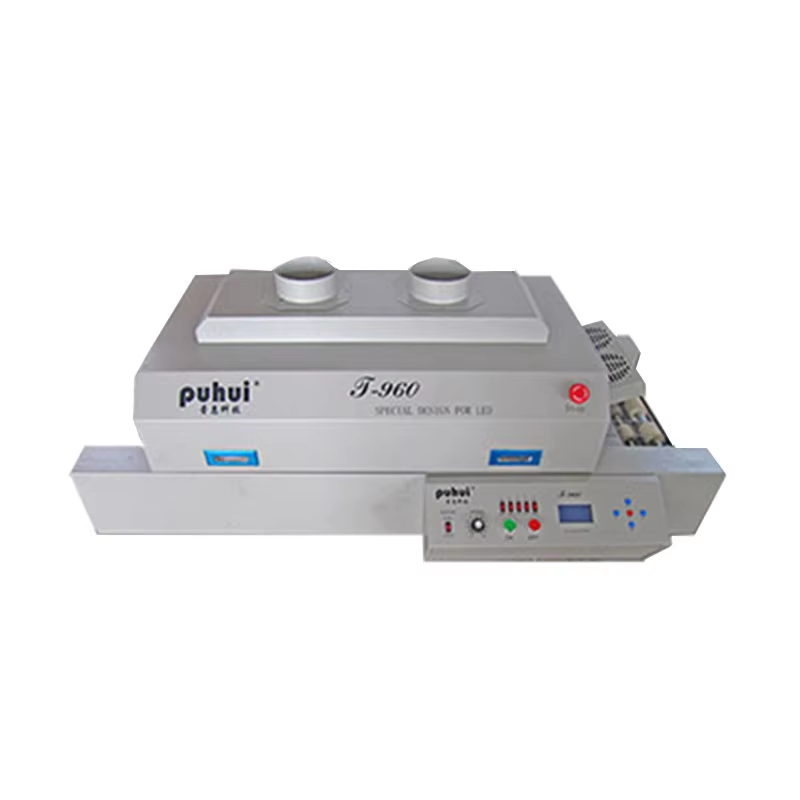
Understanding Online Reflow Ovens in Modern SMT Assembly Lines
Inline reflow ovens play a crucial role in surface mount technology (SMT) assembly lines. They continuously heat printed circuit boards, guiding them through precisely controlled temperature zones. These machines are mounted directly on the production line conveyor belt, eliminating the need for workers to manually manipulate the boards after solder paste application until they are fully cured. This reduces delays and errors caused by human intervention. Most systems consist of four main parts: preheating, holding, reflow, and cooling. To ensure correct solder joint formation every time, each stage must be maintained within a very precise temperature range. Today, with electronic components becoming increasingly smaller and packaged more tightly, manufacturers can no longer afford any imprecise thermal management. Therefore, we see inline reflow ovens used extensively, from smartphone factories to automotive parts manufacturers and even medical device manufacturers.
Thermal uniformity and temperature accuracy are key factors affecting process consistency and repeatability.
Ensuring uniform temperature distribution across the PCB surface is crucial for successful reflow soldering and defect reduction, especially on boards containing different types of components. Modern inline reflow ovens employ forced convection heating systems, using hot air to ensure all components on the board receive the same level of heating, regardless of their size, color, or location. When temperature fluctuations in critical areas are controlled within 1 degree Celsius, all components on the board simultaneously reach ideal reflow conditions. This helps avoid issues such as insufficient solder joint strength or component towering (tombstone effect). Real-world data shows that systems with temperature fluctuations controlled below 2 degrees Celsius have defect rates that are 20% to 40% lower than older models with lower control precision. This precision is critical for manufacturers that include both high-power components and precision micro-BGAs, as uneven heating can lead to material deformation or solder balling.
Continuous processing and its impact on throughput optimization in electronics manufacturing
Online reflow ovens operate on a continuous flow principle, significantly increasing production speed compared to traditional intermittent production methods and avoiding repeated start-ups and shutdowns of circuit boards. Manufacturers using a dual-channel configuration can produce approximately 120 circuit boards per hour. This allows the machine to operate at full capacity most of the time and maintain stable temperatures throughout long production cycles. Connecting these reflow ovens to automated material handling systems (such as PCB tray loaders) ensures that circuit boards are always ready for reflow soldering. The entire system operates extremely smoothly, easily meeting stringent Six Sigma quality standards even under tight time constraints. For companies producing high-volume electronic components, this configuration offers significant advantages in terms of both quality and production efficiency.
Optimize temperature profiles to improve weld consistency
Heating zone configuration and control in advanced reflow oven systems
Today's inline reflow ovens come equipped with between 8 and 14 separate heating zones that let manufacturers adjust thermal settings according to different PCB layouts and components. These heating areas stay pretty accurate too, usually within about 1 degree Celsius. They achieve this through several thermocouples spread out along the conveyor belt which constantly check how hot things are getting throughout the process. With such detailed control over heat, factories can tweak when temperatures rise, how long they stay warm, and what the maximum gets to, which helps avoid problems like boards coming apart or solder not sticking properly. According to industry reports, companies that manage these heating zones well see around an 85% drop in solder issues. That makes sense why so many manufacturers now consider proper zonal control essential for making reliable electronics products as mentioned in the Electronics Manufacturing Journal last year.
Forced convection and hybrid heating technologies for enhanced thermal response
Forced convection is now pretty much the go-to method in reflow tech because it can spread heat quickly and evenly across those complicated PCB layouts. The fast moving air helps keep temperatures consistent between big and small parts on the board, which allows manufacturers to control how fast things heat up from about 1.5 to 3 degrees per second while still maintaining stability. When dealing with tricky situations boards where have both through hole and surface mount components, some companies use hybrid systems that mix convection heating with infrared or vapor phase techniques to handle these tough thermal challenges. According to research published in SMT Assembly Review last year, this combined approach actually makes solder joints 40 percent more consistent compared to older methods. That kind of improvement really matters when working on advanced packaging solutions and dense circuit boards where reliability counts.
Fixed vs. dynamic thermal profiling: Balancing stability and flexibility in high-speed lines
When setting up their production lines, manufacturers face a choice between fixed and dynamic thermal profiling methods depending on what they need to produce. Fixed profiles work great when running dedicated lines that make exactly the same boards over and over again, which helps keep processes stable over time. Dynamic profiling takes a different approach altogether. It adjusts on the fly as things change during manufacturing like PCB thickness variations, differences in component placement density, and shifts in overall thermal load across the board. Smart control systems built into these setups spot temperature deviations and tweak individual heating zones automatically to stay within target ranges. For shops dealing with lots of different products at once, this kind of flexibility makes all the difference while still maintaining quality standards. Real time data analysis built into modern equipment means solder joints come out consistently good even when production variables start bouncing around.
Automation Integration: From PCB Handling to Seamless Line Flow
Dual-lane systems and central support mechanisms for stable, scalable production
The dual lane inline reflow oven setup lets factories run two printed circuit board lines at once without messing up the heat distribution or structural integrity. These machines have central supports that hold boards straight as they move through, so there's less chance of them bending or getting warped. The heat gets applied evenly on both sides whether dealing with big panels or delicate thin ones. For manufacturers looking to boost output, this means doubling what comes out without needing more floor space or losing control over the process parameters. Many electronics makers find this arrangement works well when their order volumes start climbing because it scales pretty nicely without major capital investments.
PCB Magazine Loader Unloader Machine: Enabling automated material handling and reducing human error
Magazine handling systems that work with inline reflow ovens keep production moving without stopping. When companies eliminate manual loading processes, damage during handling drops significantly along with placement mistakes. Industry data shows around an 87% reduction in these issues after implementation. The systems also ensure boards come through at regular intervals, something that makes a big difference for maintaining proper heat distribution across the assembly line. Without sudden changes in feed rate, solder joints stay strong and reliable. running unattended overnight shifts or during peak production periods.
Flux recovery systems and their role in maintaining a clean, consistent process environment
Flux filtration and recovery systems work together to trap those pesky volatile organic compounds (VOCs) that come off during the reflow process, which keeps sensitive parts inside machines safe from getting dirty. When these systems pull flux residue out of the air that gets recycled back into the system, they stop gunk from collecting on important spots like heaters and temperature sensors. This means temperatures stay where they should be, and machines last longer without breaking down so often. Cleaner conditions inside the equipment lead to more consistent heat performance across runs. Maintenance doesn't need to happen as frequently either – some facilities report needing service about 40% less often after installing these systems. Less frequent breakdowns mean production lines keep running smoothly, which everyone knows saves money in the long run.
Real-Time Monitoring and Process Stability Through Smart Controls
Equipment calibration and real-time monitoring for defect prevention in high-volume settings
Getting the calibration right matters a lot when it comes to keeping things stable during mass production runs. Modern inline ovens come equipped with built-in thermal sensors plus optical monitoring systems that keep an eye on temperatures throughout every section of the oven. When something goes off track from what's been set as standard, these systems send out warnings so operators can jump in and fix problems before bad circuit boards get made. Plants that have switched to automatic calibration setups see around a 40% drop in temperature fluctuations versus old school manual approaches. This means fewer defects overall and better quality control across the board. For manufacturers dealing with tight tolerances, this kind of precision makes all the difference between hitting their targets or falling short.
Software-driven process control: Enabling predictive maintenance and adaptive correction
Advanced software solutions turn raw sensor information into useful knowledge through machine learning techniques. The systems look at past performance patterns to spot when machines start showing signs of wear or when processes begin to deviate from normal operation. This allows factories to schedule maintenance work during regular shutdown periods instead of waiting for breakdowns. When companies move away from fixing problems after they happen to addressing issues before they cause trouble, they can prevent unexpected production stops and keep temperatures stable throughout operations. Factories that adopt this method setup tend to see better equipment longevity and find it easier to implement improvements across their entire manufacturing over time.
Leveraging IPC-CFX and SMEMA standards for data integration and smart factory readiness
When manufacturers follow IPC-CFX and SMEMA standards, their reflow ovens can talk to all the other equipment on the production line without any problems. The protocols actually let important stuff like thermal profiles, where each board is at in the process, and what's going wrong get passed along instantly throughout the whole factory floor. What happens next? Well, machines both before and after the oven, such as those pick-and-place devices and quality check stations, start making adjustments automatically depending on exactly what each particular board needs at that moment. Getting all these systems to work together this way cuts down on mistakes people make when entering data manually. Plus it creates something pretty amazing these days - manufacturing lines that run themselves almost completely, adjusting parameters on their own as conditions change during production runs.
Reducing Defects and Ensuring Long-Term Repeatability
Precision engineering to prevent cold joints, tombstoning, and solder ball formation
Inline reflow ovens that are advanced in design tackle many of the problems that lead to solder defects thanks to their precise thermal control capabilities. When boards get heated evenly across the board, it stops those pesky cold joints from forming because every solder joint actually reaches the right melting point. The way these machines handle the ramp up and soak periods makes a big difference too they manage the wetting forces so tombstoning doesn't happen, especially important when dealing with those tiny surface mount chips. Adding nitrogen into the mix cuts down on oxidation issues, and good exhaust systems help clear away flux residue before it becomes a problem, which also keeps solder balls from appearing. All these elements working together make for a solid manufacturing process that produces quality work time after time, even when handling complicated PCBs with really tight component spacing.
Empirical evidence: Defect rate reduction using inline reflow ovens (industry benchmarks)
Looking at industry standards shows that inline reflow tech really stands out when dealing with large volumes. These newer systems can get defect rates down under 50 PPM, which is quite a jump from the old school batch ovens we used to see around here. Some manufacturers report improvements anywhere between 60 to 80 percent better results. And what does this mean for actual production? Well, first pass yields go up roughly 15 to 25 percent. That translates to fewer people needed for fixing mistakes, less wasted materials lying around, and no more waiting for things to be fixed before moving on. Another big plus comes from how these inline systems work continuously without stopping. Traditional methods require constant loading and unloading that created all sorts of thermal stress on components. Inline processing eliminates that back and forth heating cycle, so components tend to last longer once they're actually deployed in the field.
Closed-loop feedback systems: the future of anomaly detection and self-correction processes
The latest generation of reflow ovens is equipped with a closed-loop feedback system that combines real-time sensing with automatic correction. These intelligent devices utilize technologies such as built-in cameras, thermal sensors, and solder paste detection to identify problems such as component placement, solder volume, or temperature fluctuations. Once a malfunction occurs, the reflow oven can automatically adjust—for example, slowing down the conveyor belt speed, adjusting the heating zone, or even changing the air-fuel mixture ratio. Some manufacturers have begun applying machine learning algorithms as early warning systems for equipment malfunctions. These systems don't just detect defects after they occur; they aim to prevent them from happening in the first place. What we are seeing is that production lines are moving towards self-healing, maintaining consistent product quality regardless of what happens on the production floor.
Frequently Asked Questions
Why are online reflow ovens so important in PCB manufacturing?
Online reflow ovens are crucial because they ensure uniform heating of PCBs, reduce human error, and improve the reliability of the soldering process.
What role does forced convection play in a reflow oven?
Forced convection ensures uniform temperature distribution on the PCB board, improves solder joint consistency, and reduces defects.
How can flux recovery systems benefit reflow oven operations?
Flux recovery systems can capture VOCs and prevent contamination, thereby extending equipment life and ensuring stable thermal performance.
What is dynamic thermal analysis in a reflow oven?
Dynamic curve control can automatically adjust thermal settings according to changes in PCB characteristics to ensure optimal soldering conditions.
Table of Contents
- The core role of online reflow ovens in PCB box loading and unloading machines
- Optimize temperature profiles to improve weld consistency
- Automation Integration: From PCB Handling to Seamless Line Flow
- Real-Time Monitoring and Process Stability Through Smart Controls
- Reducing Defects and Ensuring Long-Term Repeatability
- Frequently Asked Questions