
 EN
EN
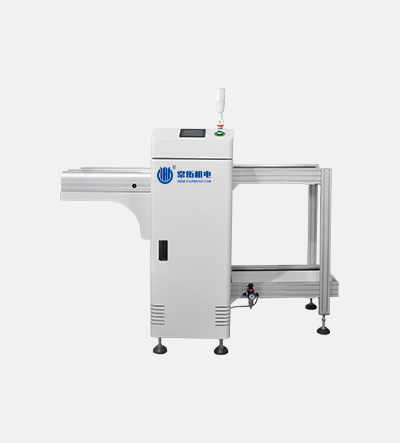
SMT Feeder Compatibility with Pick-and-Place Machines
Interface Standards Across Major Platforms (Fuji NXT, Yamaha YSM, Juki KE)
The way SMT feeders work with pick-and-place machines depends heavily on those proprietary interface standards each manufacturer has developed over time. Take a look at the market leaders and we find completely different approaches: Fuji uses pneumatic latches, Yamaha goes for electronic locking pins, while Juki relies on spring-loaded cams. These fundamental differences mean that feeders generally won't work across platforms without some serious modifications. The end result? Many manufacturing facilities end up keeping separate inventory for each machine type, which drives up costs somewhere between 15 to 22 percent based on what industry folks have been reporting lately. Some companies try to cut corners with adapters, but these solutions tend to create problems of their own. Mechanical play becomes an issue when using these adapters, especially during fast production runs or when working with components that require pinpoint accuracy. Placement errors start creeping in once tolerances drop below the IPC-7351B standard, something no one wants to see on the factory floor.
Electrical, Mechanical, and Timing Requirements: Sensors, Cam Sync, and Mounting Footprint
Reliable integration demands precise alignment across three interdependent domains:
- Sensors: Optical or mechanical sensors must detect tape advancement within ±0.1 mm tolerance (per IPC-7351B) to prevent misfeeds and component damage.
- Cam Sync: Feeder indexing timing must align with machine cycle speeds—e.g., matching 0.1s/component cycles in high-speed heads—to avoid placement drift or nozzle collisions.
- Mounting Footprint: Pitch dimensions vary across platforms (e.g., Juki KE at 20.5 mm vs. Yamaha YSM at 21.0 mm), so mismatched feeders risk lateral misalignment and inconsistent tape tension.
| Compatibility Factor | Impact | Tolerance Threshold |
|---|---|---|
| Electrical Signals | Enables real-time status feedback and error detection | ±5V DC tolerance |
| Mechanical Locking | Ensures stability during acceleration/deceleration | <0.05mm vibration displacement |
| Mounting Pitch | Maintains consistent tape guidance across feeder banks | ±0.1mm per IPC-7351B |
A 2022 assembly line study found deviations beyond these parameters contributed to 27% of nozzle errors and 19% of tape jams—underscoring the necessity of pre-deployment specification verification for zero-defect manufacturing.
Tape Width Specifications and Tolerance Management for Reliable Feeding
Standard Tape Widths (8 mm to 24 mm) and Alignment with Component Size and Pitch
Standardized carrier tape widths—from 8 mm to 24 mm—are engineered to match component size, pitch, and feeding dynamics. Smaller 8 mm tapes support fine-pitch passives like 0201 resistors and 0402 capacitors, while 24 mm variants accommodate larger ICs, connectors, and odd-form components. Optimal pairing ensures stable tape guidance and minimizes edge wear:
- 8–12 mm tapes suit components under 3.2 mm (e.g., small transistors, chip-scale packages)
- 16–24 mm widths manage QFPs, SOPs, and multi-row connectors
Mismatched selections increase the risk of tape slippage, component flipping, or guide rail binding—especially at speeds exceeding 60,000 cph.
Tolerance Thresholds (±0.1 mm) and Impact on Feeding Accuracy per IPC-7351B
IPC-7351B mandates a strict ±0.1 mm tolerance for tape width to ensure consistent feeding performance. Exceeding this threshold introduces measurable process risk:
- Wider tapes increase friction and jamming probability against feeder guides
- Narrower tapes allow lateral component shift during indexing, raising mispick rates
Statistical analysis from high-speed SMT lines shows that even minor deviations beyond ±0.1 mm elevate misfeed rates by 34%. Tight control over tape width—not just nominal selection—is therefore essential to sustain placement accuracy and reduce rework.
Aligning SMT Feeder Selection with Production Volume and Mix Requirements
High-Volume vs. High-Mix Trade-offs: Reel Change Frequency, Feeder Bank Utilization, and Changeover Efficiency
Feeder strategy must reflect production profile:
- High-volume lines, dominated by standardized passive components, benefit from dedicated feeders and long reel runs. This maximizes feeder bank utilization and minimizes changeovers—but reduces flexibility during product transitions.
- High-mix environments, handling 50+ unique components per board, require rapid reconfiguration. Dual-rail feeders cut reel-swap time by up to 40%, while intelligent systems auto-detect tape width variations (within the ±0.1 mm IPC-7351B tolerance) and adjust feed parameters accordingly.
For mixed-mode operations, prioritize feeders with quick-release mechanisms and standardized mounting footprints compatible across Fuji NXT, Yamaha YSM, and Juki KE platforms. This avoids costly compatibility gaps while preserving placement accuracy during frequent product switches.
Future-Proofing Your SMT Feeder Investment
Feeder systems that are modular and can scale up or down tend to offer better value over time when production needs keep changing. Fixed setups just don't cut it anymore really. Modular options adjust easily to different volume levels, handle all sorts of components from tiny 01005 parts right up to those micro BGA packages, and work well even with the latest high speed placement tech without needing a complete hardware overhaul. The numbers back this up too many factories report cutting their changeover downtime around 40 percent when they switch to these kinds of platforms which means machines stay productive longer overall.
Modern feeders integrate advanced identification technologies—including RFID and vision-based recognition—that automatically read reel labels and verify component specs upon loading. This eliminates manual input errors, accelerates setup, and enforces IPC-compliant placement parameters from the first cycle.
From a Total Cost of Ownership (TCO) perspective, future-ready feeders justify higher initial investment: they deliver 20–30% lower lifetime costs through reduced waste, extended service life, and vendor-agnostic compatibility. By decoupling feeder infrastructure from machine-specific lock-in, manufacturers preserve agility as standards evolve—and ensure continuity across technology refreshes.
FAQ Section
What are the main interface standards for SMT feeders?
Interface standards vary across platforms. Fuji uses pneumatic latches, Yamaha uses electronic locking pins, and Juki uses spring-loaded cams. These differences usually prevent cross-platform compatibility without modifications.
Why is ±0.1 mm tolerance important in tape widths?
The ±0.1 mm tolerance is crucial for maintaining feeding accuracy as required by IPC-7351B standards. Deviations can lead to misfeeds, increased friction, or jamming probability.
How can SMT feeders be future-proofed?
Future-proofing involves using modular feeder systems that can scale with production needs. These systems often integrate advanced technologies like RFID and vision-based recognition, which reduce manual errors and improve efficiency.
What is the impact of high-volume versus high-mix production on feeder selection?
High-volume lines benefit from dedicated feeders for reduced changeovers, while high-mix environments require rapid reconfiguration and flexibility, such as dual-rail feeders and intelligent systems to handle diverse component needs.